
The SA Amateur Athletic Association was set up in 1905 but catered for men only.
Norwood Oval hosted the 1950 Australian Championships featuring 18year-old Marjorie Jackson. More than 8,000 spectators attended
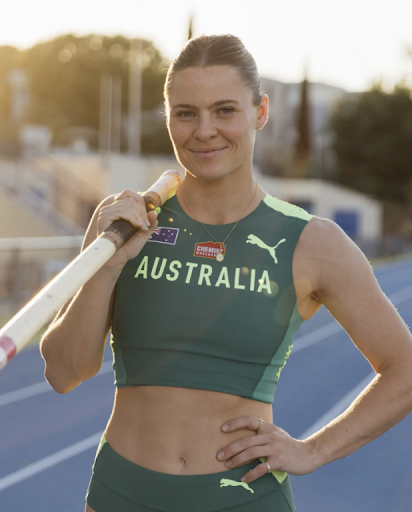
A medal incentive fund has been set up by the Australian Olympic Committee providing support for potential and successful Olympic medallists.

The 30s decade was one of turmoil for SA female athletes: major causes being competition between the professional and amateur leagues, plus the strict behaviour codes for women.
In 1933 the first truly national championships were held in Melbourne. SA sent a team of nine females in 10 events – the 100 yards, 220 yards, 880 walk, 90 yards Hurdles, Shot, Discus, Javelin, High Jump, Broad Jump, 4×110 yard relay.
The women took The Overland to Melbourne sitting up all night.
Muriel Wallace coordinated and coached the SA Women’s Professional League and in winter helped form a netball club to maintain fitness and connection with each other. Ladypeds became a famous netball club in SA.
By the early 1930s, there were about 200 females competing regularly in the professional league.
Despite the amateurs having the benefit of eligibility for state selection, their numbers had reduced to just one club – the Adelaide Harriers – and members competed among themselves.
Concerns were raised about female athletes being coached and “rubbed down” – the massaging of legs after training and competition – by male coaches.
In 1933 the SA Amateur Athletic Association refused to register the SA all female walking team for the interstate championships. SAAAA objected to “the massaging of the girls by men in open view of the public”, rather than using “the special room” provided for that purpose.
In 1935, the State Council expressed strong disapproval of Adelaide Harriers for including events for women in an AH hosted competition.
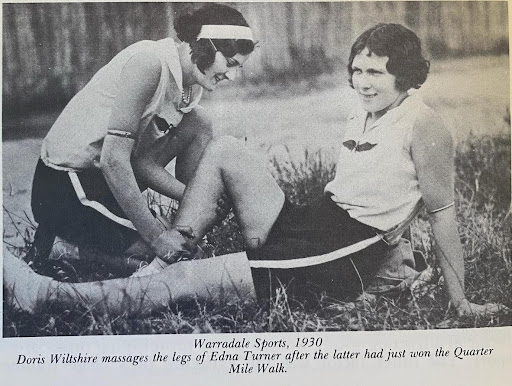
Weekly athletics competitions took place on grass adjacent to West Terrace, now called Ellis Park.
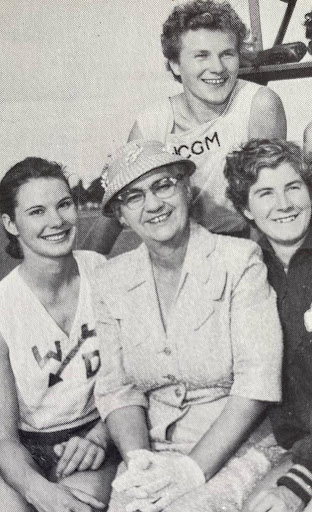
Beth Bethune was an outstanding walker, winning the state titles in the quarter and half miles, but she was also most influential in establishing the second athletics club, Western Districts in 1940.
Adelaide Harriers then had a competitor, and the two clubs decided to re-establish the SA Women’s Amateur Athletic Association and affiliated with the Australian Women’s Athletics Union.
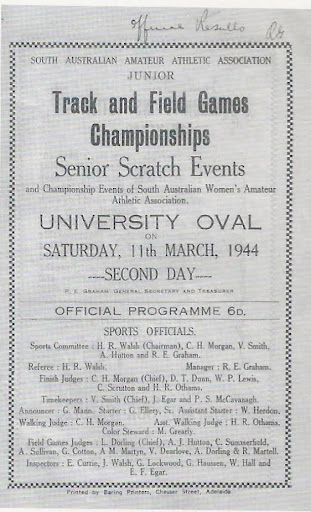
National titles were abandoned during the early 1940s because of WW2, but the State titles continued in 1942 with 65 nominations: small numbers admittedly but an improvement on the past decade.
To attract new members, both clubs took out advertisements in the local paper.
In 1946, a small group of four athletes took part in the Victorian titles. It revealed the contrast against the SA “rough-cut tracks”. Discovering Victorian athletes using starting blocks was a novelty.
Excitingly, three new clubs affiliated with the association – Adelaide University, Teachers College and Whyalla Harriers.
One of the most impressive features of the 1940s decade was the tour de force of Olympic gold medalist and world record holder, Fanny Blankers-Koen known as ‘The Flying Dutchwoman’ in 1949. Her appearance fee was 175 pounds plus costs.
The decade began excitingly. Adelaide hosted the 1950 nationals, also selection trials for the Empire Games.
Sprint sensation, 18-year-old Marjorie Jackson, appeared as did Olympic medallist, Shirley Strickland. Jackson broke the world record for the 100 yards in a time of 10.8 secs on day 2 of the championships.
Nearly 8000 spectators attended the two-day event at Norwood Oval.
The association made the most of the event’s profile and gradually grew in numbers: 60 registered females by 1954, most of whom were in their teens. In 1954, the first schoolgirls State championships. Nearly 200 girls participated from all over the State.
A young Norma Austin, later Thrower, was making her mark in the hurdles and Anna Pazera was doing the same in the javelin.
Pazera had moved to Adelaide from Poland after the 1956 Olympics.
‘The Lithgow Flash’ Marjorie Jackson-Nelson married Peter Nelson and settled in Adelaide.
A group of eight women represented SA with distinction throughout the 50s: Norma Austin (hurdles and sprint), Pat Bergin (high jump), Joy Brown (middle distance), Betty Robbie (multiple events), Ann Cooper (Shanley), Maureen Leedham (sprints) Maureen Burford (throws) and Anna Pazera (javelin).
New clubs were established in the late 50s: Postal Institute, Wattle Park Teachers College, and National Catholic Girls Movement.
By the end of the decade, the association was settled and well established, boasting more than 100 registered athletes and now handled a budget of about 700 pounds.
This decade is dominated by the establishment of a new rubber bitumen track in Kensington.
A grandstand, surrounds, and changeroom facilities was completed at a cost of $100,000. With significant contributions from the Women’s Association, meaning that women’s athletics was an equal partner in the facility, rather than being tacked onto the men’s competition.
The number of clubs increased to six and country athletics was also booming: Broken Hill, Port Augusta, Port Pirie and Whyalla. Lower Murray came a little later.
Registered numbers went from 102 competitors to 518 within the decade – plus 192 officials.
A new generation of outstanding athletes was emerging – Dianne Bowering, Josie Trimboli, Jewell Jobson, Biruta Vilmanis, Jan Riley, Judy Tapfield, Sandra Britton, and Sylvia Maxwell.
A New Zealander, Sylvia White, arrived and had success in all field events through the 60s until the emergence of Jenny Symon. Sylvia also played international basketball in the early 60s.
But the star of the 60s was a diminutive 5’ 2” Di Bowering, who burst onto the scene as a 19-year-old, winning the 100yards title in a time of 10.6secs.
Athletics was now being seen as a field of endeavour that encouraged excellence and commitment rather than a ‘masculine’ sport.
More events were added to the women’s program including the walk, pentathlon, 1500m and hurdles. Elaine MacFarlane dominated the middle-distance walks through the late 60s.
Wendy Ey, a Commonwealth Games hurdler and sprinter, took over as president in 1966 and would stay in that role until 1980.
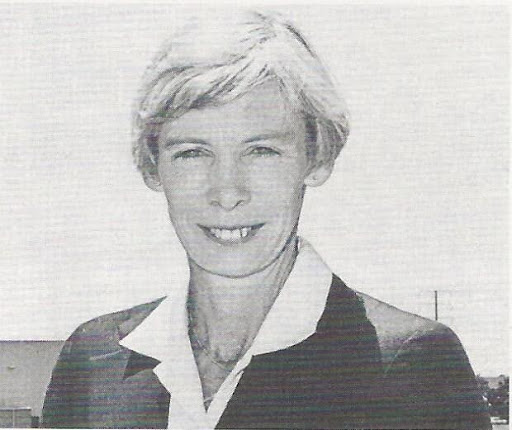
In 1975 the Kensington bitumen track was upgraded to a track surface known as Tartan – an all-weather synthetic track surfacing.
Interstate matches between SA and Victoria revealed new stars including Jenny Symon in the javelin.
A gritty, determined woman from Ireland, Lilian Harpur, dominated the walking events throughout the 70s, winning national titles in 1975, 76 and 78.
Enfield Harriers, the success story of the 70s, featured new stars as well, including a 14-year-old called Lisa O’Dea.
A new high jumper, Verna Burnard was on the rise, while Sue Dansie (Australian volleyballer) along with Jenny Symon strengthened SA’s throwing, Judy Daly featured nationally in the 800m, and Lyn Lundberg took over Di Burge’s sprinting role.
In the mid-70s, schoolgirl Melissa Jones held the fastest 400m time (57.7 secs) in the world for any schoolgirl.
Karen Hillier also held the world’s best junior time for the 1500m (4 mins 31.8secs) in 1977 at age 14.
By the mid-70s, SA began the Little Athletics Association providing modified athletic activities for kids.
More than 800 girls from 50 primary schools and 1000 girls from 80 secondary schools were competing plus large numbers competing in Little Athletics.
In 1971, SA established the first Veterans Athletics Club in Australia. Before this, the Distance Runners Club was the main outlet for older athletes.
Jeanette Kieboom represented Australia at the 1978 Commonwealth Games in the javelin, under the advanced coaching of Alan Launder from the UK.
Maureen Moyle was also well known for her distance events including winning the City-Bay Fun Run a remarkable seven times, her best time 40.33 mins.
Modelling on Judy Daly’s example of distance running, Raie Thompson from Enfield Harriers held the world record for the 10-mile run during the late 70s.
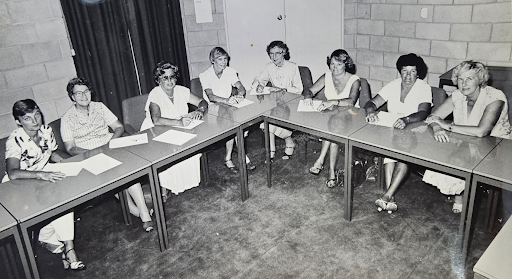
In 1990 Athletics SA was born, dissolving the title of South Australian Amateur Athletics Association.
In 1997 Russian athlete Tatiana Grigorieva moved to Australia and settled in Adelaide with her then husband, pole-vaulter, Viktor Chistiakov. In St Petersburg, she had been a 400-metre hurdler. She first tried the pole-vault once established in Adelaide.
In an exciting development in 1998, a new track and field stadium on the edge of the CBD at Mile End was opened on Australia Day, replacing the Olympic Sports Field in Kensington as Adelaide’s premier athletics venue.
Initially known as Santos Stadium, it has seating for 1,200 and a maximum capacity of 8,000. The track is a World Athletics Class 2 Certified.
The Stadium is home to Athletics South Australia, the SA Athletics League, City Bay Fun Run, the South Australian Little Athletics Association, and is regularly used by schools for sporting carnivals.
In season 2023-24, Athletics SA comprised 18 clubs:
Adelaide, Adelaide University, Coastal Districts, Enfield, Flinders, Hills Districts, Mt Barker, Northern Districts, Pembroke, Port Adelaide, SA Masters, Saints, Salisbury, South Coast, Southern, TT Gully, United Collegians, Western Districts.
Karen Fisk was added to the Athletics Honour List of Life Members along with David Prince OAM, Alan Launder, Don Brown and Rick Wilson.
Karen competed for 15 years and represented SA in track and field and cross-country events. She then began volunteering as an Athletics SA Official in 2001, now having officiated at Nationals, Commonwealth Games and World Cross Country Championships.
SA Athletics track at Mile End was resurfaced in 2022, changing from a red to blue coloured surface.
In 2023 World Athletics announced a World Athletics Heritage Plaque acknowledging ‘an outstanding contribution to the worldwide history and development of the sport of Track and Field’.
This was awarded to The Australian Track and Field Coaches’ Association Journal, formerly known as ‘Modern Athlete and Coach’. The journal was founded by SA coach, Estonian-born Jess Jarver in 1955.
World Athletics, in its commendation said, “The journal remains one of our sport’s foremost coaching publications.” That is almost 70 years after its first edition.
Bibliography:
Ian Chesterman AM President, (n.d) Australian Olympic Committee, Programs and Funding Guidelines PDF, https://www.olympics.com.au/the-aoc/funding/
Blog, ASF Study Reveals Australia’s Athletes are Living Below Poverty Line, Oct 19 2023, Australian Sports Foundation
Author: Paul Jenes, Australian Athletics History Online, Fields of Green, Lanes of Gold – The Story of Athletics in Australia, <https://www.athletics.com.au/info-hub/about-athletics-australia/history/>
24 October 2025, Wikipedia, Women’s Athletics in Australia, <https://en.wikipedia.org/wiki/Women%27s_athletics_in_Australia>
Daly, J A. Ours were the hearts to dare – a history of women’s amateur athletics in South Australia, 1930-1980. Adelaide: Gillingham Printers, 1982.
1 August 2024, Lois Quarrell, <https://en.wikipedia.org/wiki/Lois_Quarrell>
P. A. Howell, ‘Quarrell, Lois Gertrude (1914–1991)’, Australian Dictionary of Biography, National Centre of Biography, Australian National University, https://adb.anu.edu.au/biography/quarrell-lois-gertrude-16749/text28645, published online 2014
Prof John Daly, ‘Marjorie Jackson Nelson, AO, MBE’, SA History Hub, History Trust of South Australia, https://sahistoryhub.history.sa.gov.au/people/marjorie-jackson-nelson-ao-mbe/
Paul Jenes OAM, Norma Thrower 2013 Australian Athletics, <https://www.athletics.com.au/hall-of-fame/norma-thrower/>
Paul Jenes OAM 2018, Anna Bocson Australian Athletics, <https://www.athletics.com.au/hall-of-fame/anna-bocson/>
John Daly 1994, Feminae Ludens: Women’s Competitive Sport in South Australia 1936-1956, Open Book Publishers, Adelaide SA
Fletcher McEwen 2024, Vale Dianne Burge OAM OLY: Australian Athletics, <https://www.athletics.com.au/news/vale-dianne-burge-oam-oly/>
John A Daly May 1994, Against The Odds: A Pictorial History of 100 years of South Australian Women in Sport and Recreation
Paul Jenes OAM, Glennis Nunn-Cearns 2009: Australian Athletics, <https://www.athletics.com.au/hall-of-fame/glynis-nunn-cearns/>
McEwen F 2005, A Centennial Chronicle Athletics SA 1905-2005
Paul Jenes OAM 2014, Lisa Ondieki: Australian Athletics, <https://www.athletics.com.au/hall-of-fame/lisa-ondieki/>
Kathy Sambell – Grokipedia, <https://grokipedia.com/page/kathy_sambell>, Updated 2025.
Easwaran Rutnam 10 July 2023, Daily Mirror Online: Lankan-born Aussie Gold Medalist wanted to withdraw from games Van Heer sad she had to leave Sri Lanka, <https://www.dailymirror.lk/sports/Lankan-born-Aussie-Gold-Medalist-wanted-to-withdraw-from-games-Van-Heer-sad-she-had-to-leave-Sri-Lanka/244-262766>
11 April 2018, Where are they now: Katrina Webb, World Para Athletics, <https://www.paralympic.org/news/where-are-they-now-katrina-webb>
21 December 2020, Commonwealth Games Australia, Webb appointed to Australian Team Executive for Birmingham 2022: Paralympics Australia, <https://www.paralympic.org.au/2020/12/webb-appointed-to-australian-team-executive-for-birmingham-2022/>
19 October 2025, Brooke Krueger-Billett: Wikipedia, <https://en.wikipedia.org/wiki/Brooke_Krueger-Billett>
Paul Jenes OAM 2016, Tatiana Grigorieva: Australian Athletics, <https://www.athletics.com.au/hall-of-fame/tatiana-grigorieva/>
TGI Sport, Jessica Stenson (nee Trengrove), <https://tgisport.com.au/talent/jessica-stenson-nee-trengove/>
No posts found!