Athletics

STORIES OF OUR PIONEERS

Meet the trailblazers of SA Athletics. 

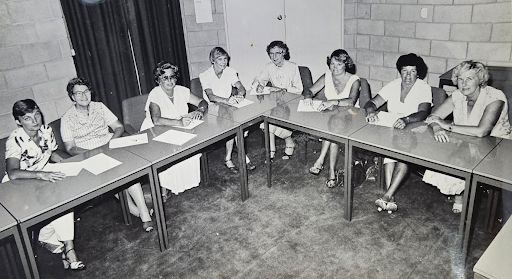
Anna Pazera

Rather than return to Communist Poland, Anna Bocson (Pazera) stayed in Australia after competing in the 1956 Melbourne Olympics.

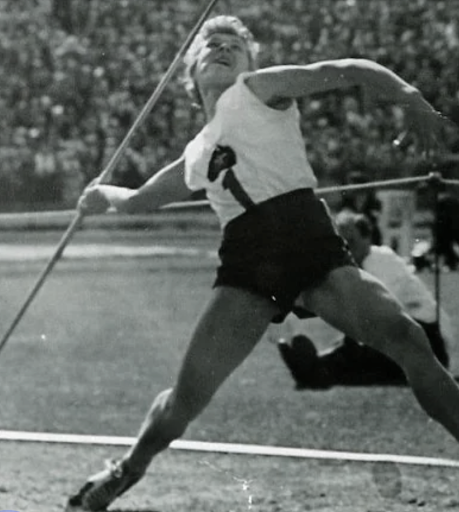
Anne Shanley (Cooper)

In 1950, Anne Shanley was SA’s first female National Champion, the first female National record holder, and SA’s first international female athlete.
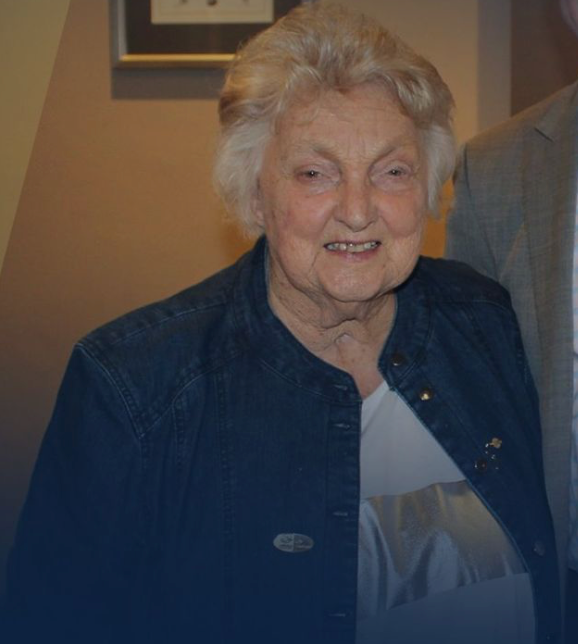
Brenda Pearl

Brenda Pearl became the first woman in the southern hemisphere to be selected on a starting panel for the World Athletics Championships.
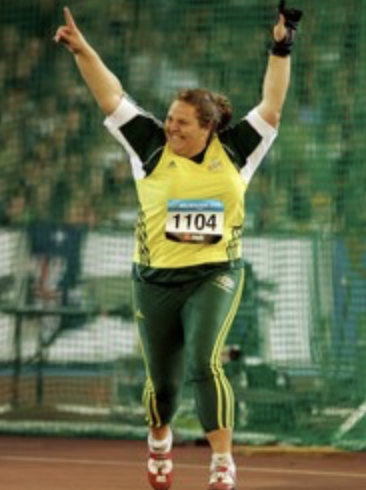
Brooke Kruger-Billett

As neither SA nor Australia had a strong tradition in throwing the 4kg hammer, in the early 2000s, she became a trendsetter.
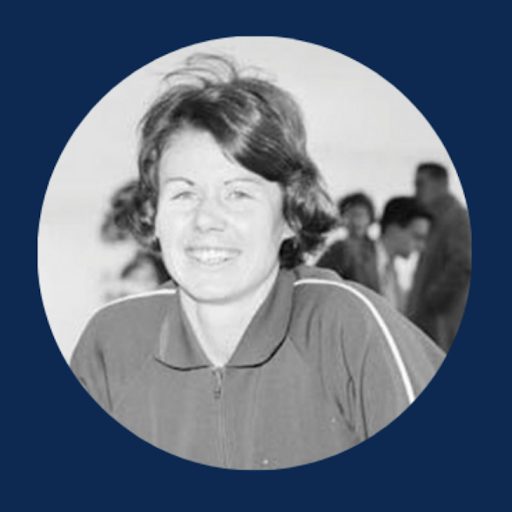
Di Burge

Di Burge was ranked #2 and #3 in the world for the 100m and 200m respectively in 1967.
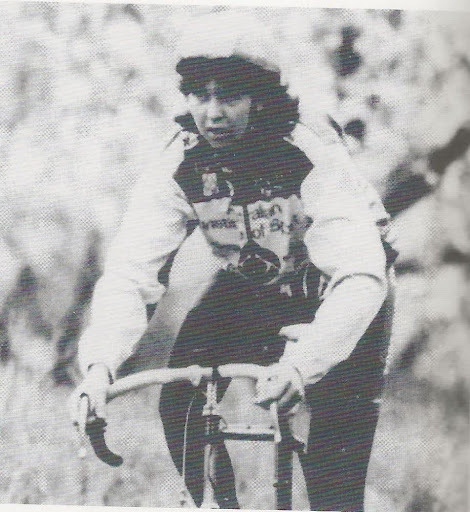
Donna Gould

Donna Gould became the first Australian woman to compete in consecutive Olympics in different sports.
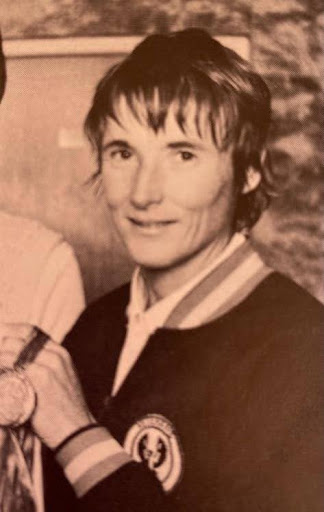
Elaine MacFarlane

Elaine MacFarlane battled old traditions that restricted women’s involvement in athletics by quietly ignoring them and participating anyway.
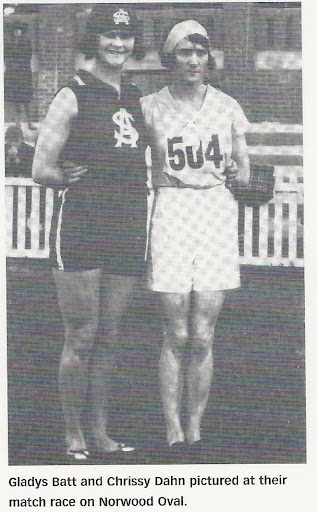
Gladys Batt

A special match race between SA’s and NSW’s fastest female sprinters took place at Norwood Oval in 1929. Gladys Batt lost by a ‘few inches”.
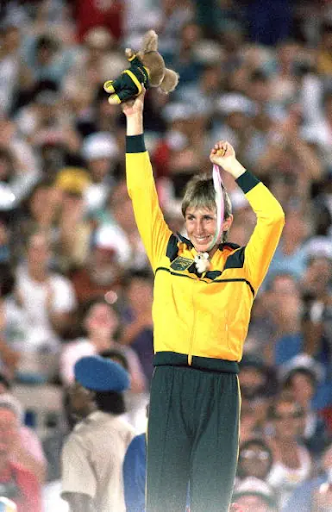
Glynis Nunn

It took 20 minutes before Glynis Nunn was confirmed as the 1984 Olympic Gold Medallist in the heptathlon.
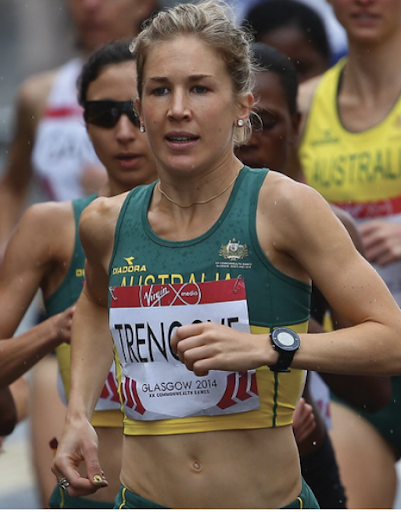
jess-stenson-trengrove-athletics

Jess Stenson (Trengove)

Jess Trengove’s time of 2:26.45 at the Paris Olympics is the second fastest marathon for an Australian at the Olympics behind Lisa Ondieki’s silver at Seoul 1988.
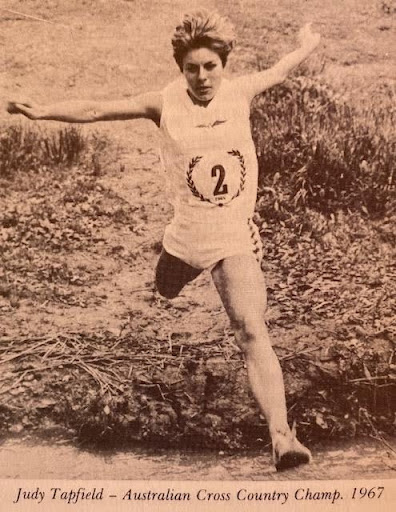
Judy Daly

Judy Daly loved the loneliness and challenge of the distance and cross-country runner and sought to inspire that same love through her coaching.
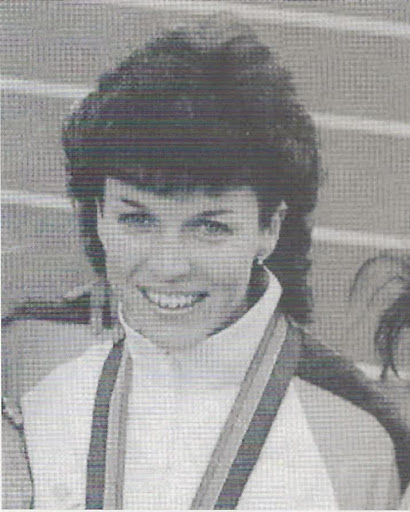
Kathy Sambell

The Commonwealth Games gold and silver medallist in the 4x100m relay was also a 1992 Olympic relay runner.
katrina-webb

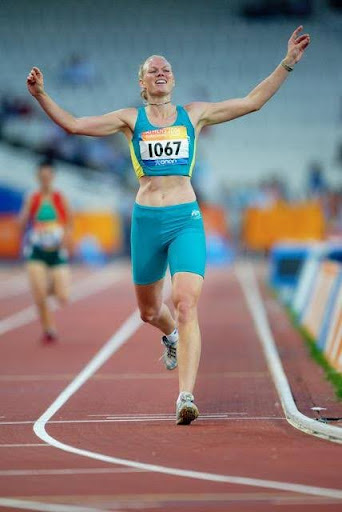
Katrina Webb

Alongside Roger Federer, Katrina Webb presented to the United Nations in New York on behalf of the International Paralympic Committee.
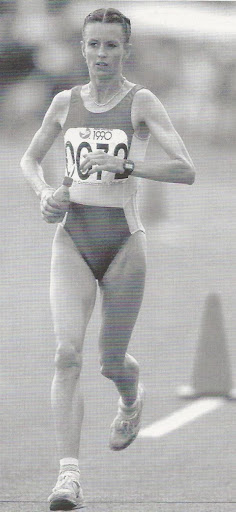
Lisa Martin

Starting her athletics as a 400m hurdler, Lisa Martin had never desired or aspired to be a marathon runner.
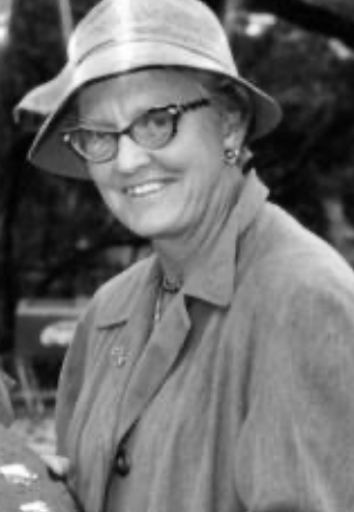
Lois Quarrell

Lois Quarrell was extraordinarily influential for SA female sports through her advocacy journalism in The Advertiser from 1930s-50s.
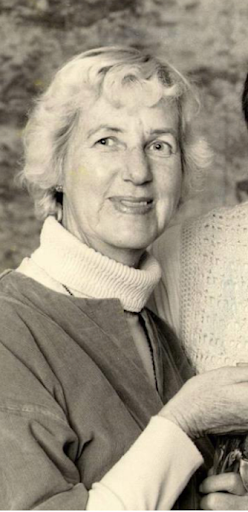
Margaret Cahill

Margaret Cahill was made an Honorary Life Governor of Athletics Australia in 1972.
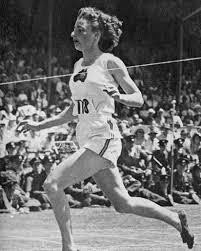
Marjorie Jackson-Nelson

On her return from the 1952 Olympics, the Qantas plane diverted its course to fly over her hometown, Lithgow.
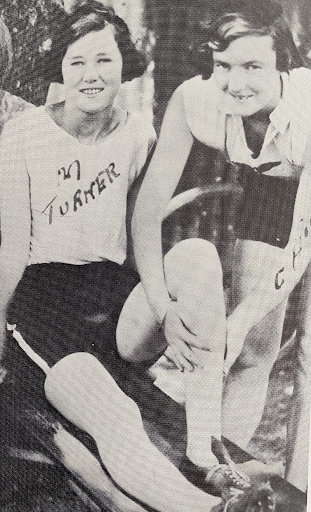
Marjorie Turner

Marjorie Turner succeeded Gladys Batt as SA’s fastest female sprinter, then turned her hand to coaching.
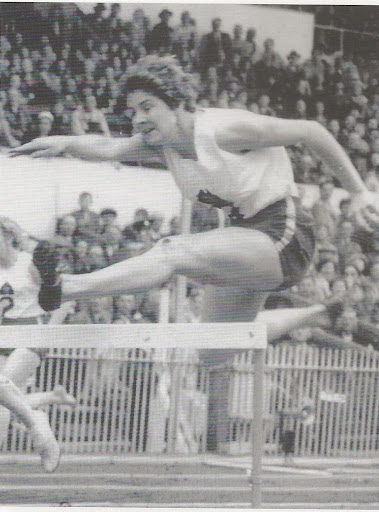
Norma Thrower

Norma Thrower was coached by her father, Arnie Austin, throughout her entire career.
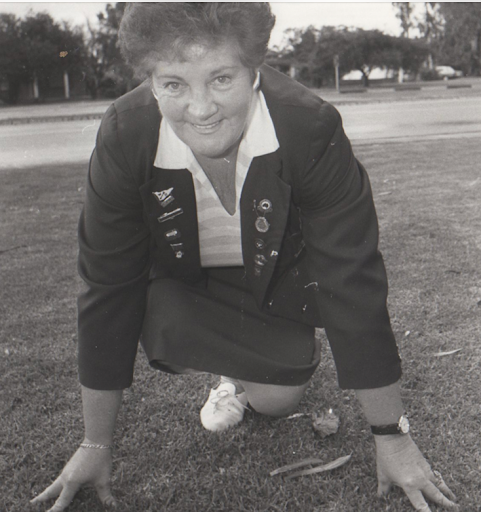
Pat Peters

Pat Peters gave 70 years of service to athletics in SA.
timeline

jess-stenson-trengrove-athletics
Olympic gold medalist and pole vaulter Nina Kennedy - Source: Athletics Australia

ATHLETICS TODAY:

  • Olympic Games medalists are eligible for funding from the Australian Olympic Committee’s ‘Medal Incentive Fund’.
  • It is an incentive to keep elite athletes in the sport: funding athletes from the year after they win an Olympic medal, and for every year they stay in their sport until the next Games.
  • Gold medalists receive $20,000, silver $15,000, and bronze $10,000.
  • Between Olympic years, Athletics Australia uses a system to rate the success and potential success of its athletes which determines its level of support.
  • That support includes testing, coach mentoring, financial support, travel, psychology, research and more.
  • However, Australian track and field athletes, unless they have a high public profile, are an Olympic gold medalist or work part-time, generally live below the poverty line – earning around $23,000 each year.
  • Paralympic athletes can also apply for grants from the Australian Sports Commission to assist with travel barriers. 

RECORDS. MILESTONES. MOMENTS.

The SA Amateur Athletic Association was set up in 1905 but catered for men only.

Norwood Oval hosted the 1950 Australian Championships featuring 18year-old Marjorie Jackson. More than 8,000 spectators attended

A medal incentive fund has been set up by the Australian Olympic Committee providing support for potential and successful Olympic medallists.

HISTORICAL TIMELINE

katrina-webb
World and Olympic champion Sally Pearson. - Source: Athletics Australia

Pre and early 1900's

  • Women were expected to be gentle by nature and pursue passive indoor cultural activities. Sport, on the other hand, generally required assertion, aggression, competition and dominance.
  • Any outdoor activities such as croquet or tennis – played in the gardens of the wealthy – were generally played “flirtatiously’ by women who were not expected to take the sport or their participation too seriously.
  • The invention of the bicycle gave women more freedom, more independence while enjoying improved health.
  • WW1 (1914-1919) required women to work which gave them more financial independence and sport became a means of self expression.
  • The SA Amateur Athletic Association was set up in 1905 but catered for men only.

1920's

  1. The first SA Marathon was held in 1920 with six participants, none of whom were female. Running such a distance was seen as impossible for a woman’s body.  
  2. The first significant formally organised women’s athletics competition in SA was held at Adelaide Oval on 24 August 1921. It was the first combined girls school sports which was contested by seven schools: Walford House, St Peter’s Girls Collegiate, St Dominic’s, The Wilderness, Poltanga, Creveen and Riverside. 
  3. The girls competed in box pleats with collar and ties. The only exception was in the high jump where the voluminous box pleats seriously handicapped clearance or the bar. The following year girls tucked their skirts into their bloomers to alleviate the problem. By 1923 the skirts were replaced by “natty short jumpers with navy blue bloomers”. 
  4. In 1928 a Physical Culture Association was formed which included 28 community clubs throughout SA, encouraging ‘beauty and grace through scientific exercise.’ 
  5. While sports for women began to flourish around SA, women’s athletics also sprung up.  
  6. Tacked onto the State men’s championship in 1928, one event for women was held: the 75-yard race with seven women competing.  
  7. Those runners were: Gladys Batt, Maureen Carmody, Florence Carr, Norah Chatterham, Gerty Jennings, Dolly Swayne and Edna Thompson. Dolly Swayne won in 9.2 seconds. 
  8. The event was so popular, it was repeated over the following two years – a period in which Gladys Batt became the acknowledged outstanding female runner. 
  9. Meanwhile amateur athletics was being overtaken by professional leagues which offered prizemoney rather than sashes and trophies. The professional league was well organised and by the end of the 1920s, about 200 young women were competing in that league. 
  10. Prizemoney was one pound 10 shillings for first, 7/6 for second and 2/6 for third. Women had three events on the program – the 50, 75 and 100 yards. 
  11. Australia sent its first female sprinter to the Olympic Games in 1928 in Amsterdam, her name was Edith Robinsons from NSW. 

1930's

  1. The 30s decade was one of turmoil for SA female athletes: major causes being competition between the professional and amateur leagues, plus the strict behaviour codes for women.
  2. In 1933 the first truly national championships were held in Melbourne. SA sent a team of nine females in 10 events – the 100 yards, 220 yards, 880 walk, 90 yards Hurdles, Shot, Discus, Javelin, High Jump, Broad Jump, 4×110 yard relay.
  3. Phyllis Hicks became the first ever SA medalist by winning silver in the 880 yards walk. Betty Hawkes, Clarice Hicks, Bonda Ray and Marjorie Turner added a second silver in the 4 x100 metres relay.
  4. The women took The Overland to Melbourne sitting up all night.
  5. Muriel Wallace coordinated and coached the SA Women’s Professional League and in winter helped form a netball club to maintain fitness and connection with each other. Ladypeds became a famous netball club in SA.
  6. By the early 1930s, there were about 200 females competing regularly in the professional league.
  7. Despite the amateurs having the benefit of eligibility for state selection, their numbers had reduced to just one club – the Adelaide Harriers – and members competed among themselves.
  8. Adelaide hosted the National Games in January 1936 as part of SA’s Centennial Celebrations. The athletics carnival, held on Adelaide Oval, served as selection trials for the Berlin Olympics. SA’s Dell Hill won the discus with a throw of 93’6½ and Marjorie Turner was a close second to Clarice Kennedy in the 100 and 220 yards. Laurel Anderson went on to be the state’s best sprinter over the following two years.
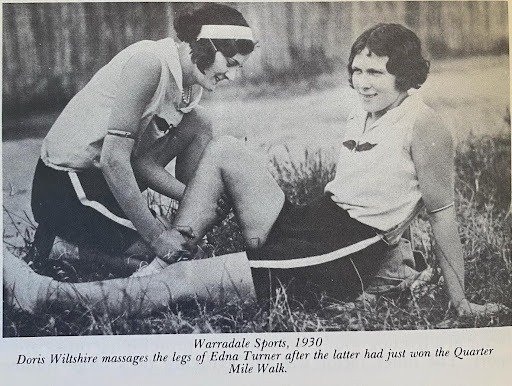
  9. Concerns were raised about female athletes being coached and “rubbed down” – the massaging of legs after training and competition – by male coaches.
  10. In 1933 the SA Amateur Athletic Association refused to register the SA all female walking team for the interstate championships. SAAAA objected to “the massaging of the girls by men in open view of the public”, rather than using “the special room” provided for that purpose.
  11. In 1935, the State Council expressed strong disapproval of Adelaide Harriers for including events for women in an AH hosted competition.


Source: Ours Were the Hearts to Dare

1940's

  1. A meeting at the YMCA board room on 15 June 1941 resolved to form the SA Women’s Amateur Athletics Association. 15 women and three men attended and elections voted Miss T Walker as the inaugural president and Mrs I Bethune as secretary/treasurer.
  2. The new association then affiliated with the Australian women’s Athletics Union.
  3. Weekly athletics competitions took place on grass adjacent to West Terrace, now called Ellis Park.
  4. Beth Bethune was an outstanding walker, winning the state titles in the quarter and half miles, but she was also most influential in establishing the second athletics club, Western Districts in 1940.
  5. Adelaide Harriers then had a competitor, and the two clubs decided to re-establish the SA Women’s Amateur Athletic Association and affiliated with the Australian Women’s Athletics Union.
  6. To attract new members, both clubs took out advertisements in the local paper.
  7. Joan Dansie demonstrated her talent in Swan Hill in May 1940 when she finished second to one of the nation’s top sprinters, Joyce Walker. She finished second in the 100 yards, two yards behind Walker, in an estimated time of 11.7. She backed up with third place in the 220 yards.
  8. Bette Davis was the outstanding competitor in the 1943 State Championships. She won both the 100 and 220 yards as well as taking the high and long jump. She regularly featured in the wartime championships making one of the leading athletes of her time.
  9. In 1946, a small group of four athletes took part in the Victorian titles. It revealed the contrast against the SA “rough-cut tracks”. Discovering Victorian athletes using starting blocks was a novelty.
  10. Excitingly, three new clubs affiliated with the association – Adelaide University, Teachers College and Whyalla Harriers.
  11. One of the most impressive features of the 1940s decade was the tour de force of Olympic gold medalist and world record holder, Fanny Blankers-Koen known as ‘The Flying Dutchwoman’ in 1949. Her appearance fee was 175 pounds plus costs.
  12. Almost 20,000 spectators turned out to watch ‘the greatest woman athlete the world has ever seen’, as recorded in the media of the time.
  13. Hosting this hugely successful event which brought a profit of 1000 pounds, gave the SA Association the confidence to host the nationals for the first time in 1950.
  14. Mary McTaggart won every cup event at the university Sports on 11 May 1949. She won the two short sprints, the hurdles and the high and long jumps. McTaggart was the most outstanding University athlete of the post-war years winning multiple University Cups and Intervarsity Championships.
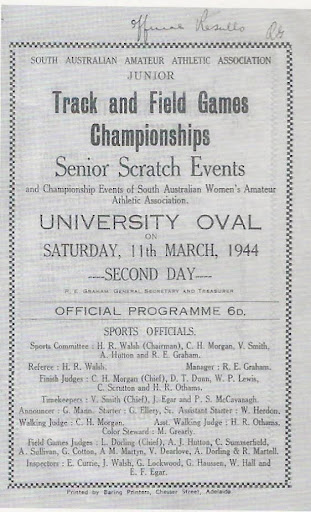
Official Program for the National Track and Field Championships, 1944. Source: Centennial Chronicle

1950's

  1. The decade began excitingly. Adelaide hosted the 1950 nationals, also the selection trials for the Empire Games.
  2. Sprint sensation, 18-year-old Marjorie Jackson, appeared as did Olympic medalist, Shirley Strickland. Jackson broke the world record for the 100 yards in a time of 10.8 secs on day 2 of the championships.
  3. Nearly 8000 spectators attended the two-day event at Norwood Oval.
  4. The association made the most of the event’s profile and gradually grew in numbers: 60 registered females by 1954, most of whom were in their teens.
  5. In 1954, the first schoolgirls State championships. Nearly 200 girls participated from all over the State.
  6. A young Norma Austin, later Thrower, was making her mark in the hurdles and Anna Pazera was doing the same in the javelin.
  7. Pazera had moved to Adelaide from Poland after the 1956 Olympics.
  8. ‘The Lithgow Flash’ Marjorie Jackson-Nelson married Peter Nelson and settled in Adelaide.
  9. A group of eight women represented SA with distinction throughout the 50s: Norma Austin (hurdles and sprint), Pat Bergin (high jump), Joy Brown (middle distance), Betty Robbie (multiple events), Ann Cooper (Shanley), Maureen Leedham (sprints) Maureen Burford (throws) and Anna Pazera (javelin).
  10. SA athletes won four medals in the National Championships in Sydney. Thrower and Pazera won their respective events to clinch selection for the Cardiff Games, Maureen Leedham took silver in the 440 yards with a time of 57.3 seconds and Bettie Robbie jumped 18’5¼ in the long jump for bronze in the long jump.
  11. New clubs were established in the late 50s: Postal Institute, Wattle Park Teachers College, and National Catholic Girls Movement.
  12. By the end of the decade, the association was settled and well established, boasting more than 100 registered athletes and now handled a budget of about 700 pounds.

1960's

  1. Norma Thrower equaled the world record for the 80 metres hurdles in recording 10.6 in Brisbane on 28 March 1960.
  2. In 1968, Di Burge equaled the existing world record for 60 metres with a time of 7.2 seconds in Brisbane o 13 March. She added the national 200 metres record by clocking 23.0 to win the national championship.
  3. This decade is dominated by the establishment of a new rubber bitumen track in Kensington.
  4. A grandstand, surrounds, and changeroom facilities was completed at a cost of $100,000. With significant contributions from the Women’s Association, meaning that women’s athletics was an equal partner in the facility, rather than being tacked onto the men’s competition.
  5. A year later, with the new track well in place, records had been broken in almost every event.
  6. The Australian Women’s Championships moved from a biannual to an annual event in 1963. The SA medal share increased due to the efforts of multiple gold medalists Dianne Burge and Anna Pazera. Janet Riley supported the medal tally with five medals.
  7. The start of the 1960s saw Lilian Kavanagh’s 17-year commitment leading the SA Women’s Association end. Highly respected, she had worked tirelessly for female athletes and was lauded for her outstanding service.
  8. The number of clubs increased to six and country athletics was also booming: Broken Hill, Port Augusta, Port Pirie and Whyalla. Lower Murray came a little later.
  9. Registered numbers went from 102 competitors to 518 within the decade – plus 192 officials.
  10. A new generation of outstanding athletes was emerging – Dianne Bowering, Josie Trimboli, Jewell Jobson, Biruta Vilmanis, Jan Riley, Judy Tapfield, Sandra Britton, and Sylvia Maxwell.
  11. A New Zealander, Sylvia White, arrived and had success in all field events through the 60s until the emergence of Jenny Symon. Sylvia also played international basketball in the early 60s.
  12. But the star of the 60s was a diminutive 5’ 2” Di Bowering, who burst onto the scene as a 19-year-old, winning the 100yards title in a time of 10.6secs.
  13. Athletics was now being seen as a field of endeavour that encouraged excellence and commitment rather than a ‘masculine’ sport.
  14. Biruta Vilmanis became the first South Australian woman to compete in the World University Games when she won bronze in the 400 metres in Tokyo. Her time was 56.5.
  15. More events were added to the women’s program including the walk, pentathlon, 1500m and hurdles. Elaine MacFarlane dominated the middle-distance walks through the late 60s.
  16. Wendy Ey, a Commonwealth Games hurdler and sprinter, took over as president in 1966 and would stay in that role until 1980.
  17. She was also a PE lecturer and respected coach and continued to compete with distinction in the world veteran’s championships.
  18. She was also Athletics Section Manager of the Australian team for the 1984 Olympics.
  19. Wendy Ey, more than anyone during this period, led the way for women’s athletics in South Australia. Using her calm demeanour, wisdom, intellect and strategic thinking, she helped create a safety net for the future of women’s track and field in SA.
  20. Many senior women in SA remain thankful for Wendy Ey’s leadership after athletics in SA had been dominated by male administrations and decisions made for males by males.
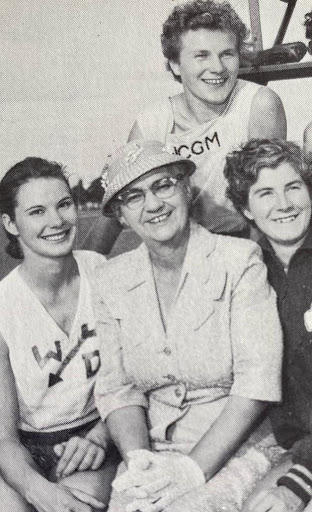
Retiring president, Lilian Kavanagh surrounded by leading SA athletes. - Source: Ours were the Hearts to Dare.
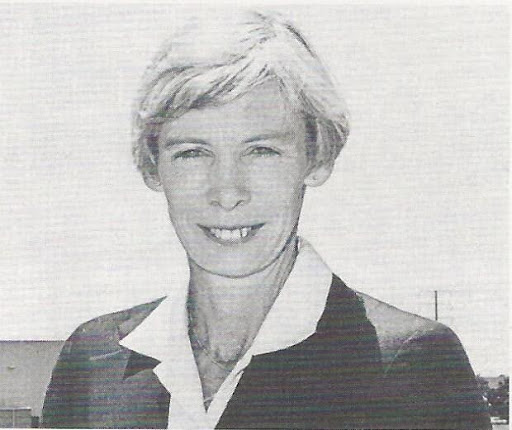
Wendy Ey. Source: A Centennial Chronicle

1970's

  1. In 1975 the Kensington bitumen track was upgraded to a track surface known as Tartan – an all-weather synthetic track surfacing.
  2. Interstate matches between SA and Victoria revealed new stars including Jenny Symon in the javelin.
  3. A gritty, determined Irish immigrant, Lilian Harpur, dominated the walking events throughout the 70s, winning national titles in 1975, 76 and 78.
  4. Ms Harpur won seven national titles in both road and track events with another six runner-up placings. She was a tough competitor as indicated by her propensity to ride her bike to interstate competitions in Melbourne.
  5. Enfield Harriers, the success story of the 70s, featured new stars as well, including a 14-year-old called Lisa O’Dea.
  6. A new high jumper, Verna Burnard was on the rise, while Sue Dansie (Australian volleyballer) and Jenny Symon strengthened SA’s throwing, Judy Daly featured nationally in the 800m, and Lyn Lundberg took over Di Burge’s sprinting role.
  7. Jenny Symon won the national javelin throw in Perth with a distance of 48.84m. She went on to win the silver medal at the Commonwealth Games in Christchurch two years later with a throw of 52.14m.
  8. Jenny Symon was the first of a string of female javelin throwers who were coached by Alan Launder to Australian representation. Jeanette Kieboom threw in Edmonton in 1978, and Kate Farrow took silver in the 1990 Auckland Games.
  9. In the mid-70s, schoolgirl Melissa Jones held the fastest 400m time (57.7 secs) in the world for any schoolgirl.
  10. Karen Hillier also held the world’s best junior time for the 1500m (4 mins 31.8secs) in 1977 at age 14.
  11. By mid-70s, SA began the Little Athletics Association providing modified athletic activities for kids.
  12. More than 800 girls from 50 primary schools and 1000 girls from 80 secondary schools were competing plus large numbers competing in Little Athletics.
  13. In 1971, SA established the first Veterans Athletics Club in Australia. Before this, the Distance Runners Club was the main outlet for older athletes.
  14. Maureen Moyle was also well known for her distance events including winning the City-Bay Fun Run a remarkable seven times, her best time 40.33 mins.
  15. Modelling on Judy Daly’s example of distance running, Raie Thompson from Enfield Harriers held the world record for the 10-mile run during the late 70s.

1980's

  1. On 6 June 1980, at a meeting at Pembroke School in Kensington, both the Women’s and Men’s Associations were dissolved, and a new Association was formed – the Amateur Athletic Association of SA.
  2. The move had been two years in the making.
  3. Female administrators leading the amalgamation. 
  4. But it also signaled a full circle moment when, in the 1930s, the women were forced to create their own association because the Men’s Association refused to take them seriously, and now they held full and equal authority over their sport.
  5. In 1982 the South Australian Sports Institute was established offering support to elite individuals and teams. Athletics was not included in the first round of sport selections.
  6. South Australia excelled in the national out-of-stadium events throughout most of the 1980s: Desiree Letherby won the 10K road race in 1980 and the cross-country in 1981. Alongside silver medalist Janis Hams, they led SA to the cross-country team gold medal. Donna Gould added consecutive 15K road race titles (1984 & 85), and Lisa Martin was victorious in 1988.
  7. The 1984 Olympics featured gold medal pentathlon success for SA with Glynis Nunn, who had moved to Adelaide.
  8. Lisa Martin won the marathon silver medal at the 1988 Olympics in Seoul.
  9.  Wendy Abbott was a Western Districts star and one of the club’s most celebrated athletes. She represented Australia several times from 1985-1990. Her SA records for the Open 800 and Mile stood for many years.
  10. Adelaide hosted the first national women’s marathon championship in which Janice Dobbie was the only South Australian. She finished tenth in 3:19.59. Desiree Letherby took fourth in Melbourne the following year leading SA to a gold medal in the team competition. Anne Mann, Trudi Fenton and Molly Whitehorn all added marathon silvers in 1982, 1988 and 1989 respectively.
  11. Alison Inverarity attended Pembroke School for five years where she was taught to high jump by Fletcher McEwen. She jumped 1.83 while at school before returning to Perth. She had a stellar career – winning eight Australian Titles, the World University Games and Commonwealth Games titles. She competed in three Olympic Games and equaled the Australian record of 1.98m. The latter record stood for 25 years.
  12. Sharon Barber jumped 1.90 to finish third in the national high jump. The record has stood the test of time as it remains intact 38 years later. Kate Farrow took over the mantle of javelin excellence from Jeanette Kieboom thus extending the influence of coach Alan Launder.
Female administrators leading the amalgamation. - Source: Ours Were the Hearts to Dare

1990's

  1. In 1990 Athletics SA was born, dissolving the title of South Australian Amateur Athletics Association.
  2. When the IAAF Regional Development Centre for Oceania was established in Adelaide, Athletics SA provided accommodation in their headquarters at Olympic Sports Field.
  3. This resulted in many high standard international athletes training and competing in Adelaide providing valued competition for local athletes. Local coaches attended courses run by the world’s leading coaches and some great athletes such as Fatima Whitbread. This arrangement continued into 2005.
  4. Kate Farrow was the most successful SA athlete of the decade. Coached by Alan Launder, she was part of the Field Events Training Squad (FETS), formed by Launder and Fletcher McEwen some years earlier.
  5. The goal of FETS was to promote the more difficult and technical events where good coaching and technical expertise could support athletes’ It was well supported by SASI and highly successful in lifting field event standards in SA.,
  6. Kate won a bronze medal at the 1990 Auckland Commonwealth Games with a throw of 58.98m and later competed in the 1995 World Championships.
  7. Wendy Old won both the 800 and 1500 metres at the Australian Championships in Melbourne. It would be another 9 years before another SA athlete won an individual national gold medal – Tatiana Grigorieva.
  8. In 1997 Russian athlete Tatiana Grigorieva moved to Australia and settled in Adelaide with her then husband, pole-vaulter, Viktor Chistiakov. In St Petersburg, she had been a 400-metre hurdler. She first tried the pole-vault once established in Adelaide.
  9. In 1999, Tatiana jumped 4.45 metres to gain the bronze medal at the world outdoor championships in Seville.
  10. SA’s only other competitor at the 1999 world champs was Tania van Heer who finished fifth in the semi-final of the 200m. A slight lapse in judgment saw her pipped on the line as she coasted home thinking she was safely through.
  11. In an exciting development in 1998, a new track and field stadium on the edge of the CBD at Mile End was opened on Australia Day, replacing the Olympic Sports Field in Kensington as Adelaide’s premier athletics venue.
  12. Initially known as Santos Stadium, it has seating for 1,200 and a maximum capacity of 8,000. The track is a World Athletics Class 2 Certified.
  13. The Stadium is home to Athletics South Australia, the SA Athletics League, City Bay Fun Run, the South Australian Little Athletics Association, and is regularly used by schools for sporting carnivals.
  14. Caroline Jackman represented SA throwing the javelin 1991-2000, winning a silver medal in 1999. She has since become one of SA’s highest accredited officials – as an World Athletics’ Area Technical Official.
  15. Victorian, Emma George, who was training in Adelaide with National Coach Alex Parnov, twice broke the world indoor pole vault record in especially arranged competitions at the netball stadium in Mile End. In her first competition she jumped 4.47 only to have that record eclipsed by one centimetre a day later in Europe. Eighteen day later she returned – and twice raised the record in the one competition, firstly to 4.50 and then to 4.55m.
  16. In 1999 Tania van Heer was member of the Australian 4 x 400 metres relay team which won silver at the World Indoor Championships in Maebashi, Japan. Controversy ensued as the winning Russian team had illegally changed the composition of their team between nomination and conduct of the event. Technically they should have been disqualified. Tatiana Grigorieva finished ninth in the pole vault with 4.20.
  17. Ann Cooper (Shanley) was awarded a Certificate of Outstanding Performance by the Confederation of Australian Sport for the “Best Individual Performance in 1990.” The award is not just for Masters but is open to all athletes. Her Masters world records in 200m, 400m and 800m were key to the award.

2000's

  1. An historical record of the all-time top 100 SA athletes was researched, put together and published – thanks to Ian Boswell, Fletcher McEwen, Paul Jenes, and Paul and Alanna Sutcliffe.
  2. Alifa Djibril first came to Adelaide from Togo under a scheme instituted by the Australian Olympic Committee to provide coaching for African athletes in the lead up to the Sydney Olympic Games. She returned to Adelaide after the Games where she settled and eventually married. She competed for SA at the national championships with distinction, winning shot put 4 gold, 3 silver and 5 bronze medals 2001-2017 plus 3 silver and 3 bronze medals in the discus. Outside of the sport she was a strong supporter of poor African women in South Australia.
  3. On the national stage, SA women’s athletics revealed its lack of depth with the following results: 2000 Olympics – Australian women’s athletics team has 53 competitors. One is from SA. 2004 Olympics – Australian women’s athletics team has 17 competitors: One is from SA. 2008 Olympics –  Australian women’s athletics team has 17 competitors: None are from SA.
  4. SA celebrated as Brooke Krueger won bronze at the 2003-04 Australian championships in the hammer throw, revealing her potential for international selection.
  5. Mandy Heath finished second in the decathlon at the Australian Championships in Sydney with a score of 5672. Later that year in the East Asia Games she achieved the remarkable feat of recording a personal best in all seven 2009 and 2011 constituent events, finishing second overall.
  6. Lauren Foote continued SA’s tradition in the multi-events by finishing 9th at the World Junior Championships in Jamaica with a score of 5441 points. She then won two Australian titles in 2009 and 2011 and three other bronzes in this event. She also placed second Australian in the 2012 national high jump with a height of 1.75.
  7. Apart from Brooke Billett, SA had two other competitors at the 2006 Commonwealth Games in Melbourne, Tatiana Grigorieva placed second in the pole vault (4.35m) and Katrina Webb was fourth in the Para-100m in 11.42 secs.
  8. Claire Woods was the sole SA female athlete to compete in the Beijing Olympics, she competed in the 20 kms walk finishing in 28th place in a time of 1:33.02.
  9. Jess Trengove emerged on the national scene by being the third Australian across the line in the 2009 national 10,000 metres. She ran 35:50.16. The re-emergence of SA distance events was confirmed when Tara Palm competed in the World Cross Country Championships in Amman after winning bronze medals in the national 5000m and 10,000m in the previous year.
  10. SA Junior female athletes who represented Australia in 2007: Tania Holliday – the World Juniors in Beijing. Paige Hooper – the World Youth Championships in the Czech Republic. Christie Villis – the World Cross Country. Claire Woods – the World University Games. Paige Hooper – 4th World Youth Championships.
  11. In 2008, Lauren Foote won the heptathlon at the national championships in Queensland.

2010's

  1. A $2.4m upgrade of the track and facility was completed in March 2011, and a $6 million upgrade of the venue was planned for 2022 with new lighting, video screen and track included in the improvements.
  2. SA women’s athletics began to strengthen in terms of international representation. This emergence was led by distance runners and walkers. Jess Stenson won 3 silver and 3 bronze medals at the national championships on the track together with another gold and two silvers on the road. She wasi a regular member of Australian team including the London Olympics and World Championships.
  3. Tara Palm, Caitlin and Isobel Batt-Dyle all emerged as nationally significant runners behind Trengove. Their efforts were complemented by those of the race walkers. Claire Woods (Tallent) and Tanya Holliday were regular internationals through the decade. Claire Woods braved the heat to win a silver medal in the 20 kms walk at the Commonwealth Games in New Delhi in 2010.
  4. In 2013 Tanya Holliday and Jess Trengove both competed in the World Championships in Moscow. Holliday finished 42nd in a field of 62 and Stenson finished 11th in a field of 72. Tanya Holliday was the only SA gold medalist at the 2014 national championships – in the 10km walk in 45:08.42.
  5. In 2014, Stenson went on to take bronze at the Commonwealth Games in Glasgow. Margaret Gayen also competed in Glasgow where she finished sixth in the Long Jump (6.34)
  6. Tanya Holliday was the only SA winner at the 2015 nationals. She won the 1000 metres walk in 44:56.44. She took silver in the following year.
  7. Holliday finished 26th in the Olympic 20K walk in Rio de Janiero and Jessica Stenson finished 22nd in the marathon, (2:21.34). The events had 74 and 157 entrants respectively.
  8. In 2019 Isobel Batt-Doyle, who made her international debut at the World Student Games in Taipei, finished sixth in the 10000 at the Napoli edition. Caitlin Adams matched that, placing in the 5000 metres with a time of 16:07.38
  9. In 2012/13, SA Little Athletics reported a record number of 8000 registered athletes.
  10. In the same year, SA returns one silver and one bronze for the women at the national titles: Margaret Gayen in the 100m (3rd) and Jess Trengove in the 5000m (2nd).

2020's

  1. In season 2023-24, Athletics SA comprised 18 clubs: Adelaide, Adelaide University, Coastal Districts, Enfield, Flinders, Hills Districts, Mt Barker, Northern Districts, Pembroke, Port Adelaide, SA Masters, Saints, Salisbury, South Coast, Southern, TT Gully, United Collegians, Western Districts.
  2. Distance runners and walkers continued to be in the forefront of SA athletics. Stenson, Batt-Doyle and Adams dominated national in the road racing while Olivia Sandery became a regular Australia representative in the road walks.
  3. Karen Fisk was added to the Athletics Honour List of Life Members along with David Prince OAM, Alan Launder, Don Brown and Rick Wilson.
  4. Karen Fisk competed for 15 years and represented SA in track and field and cross-country events. She then began volunteering as an Athletics SA Official in 2001, now having officiated at Nationals, Commonwealth Games and World Cross Country Championships.
  5. SA had two female representatives in the Tokyo Olympics, Isobel Batt-Dyle ran in the heats of the 5000m and Olivia Sandery was unable to finish in the walk.
  6. SA Athletics track at Mile End was resurfaced in 2022, changing from a red to blue coloured surface.
  7. Two SA women won bronze medals at the World Junior Championships in Lima. Tryphena Hewitt cleared 4.15m in the pole vault and Marley Raikawasa, competing in her second World Juniors, threw 56.25 in the discus. Marley also finished seventh in the discus throw.
  8. Jessica Stenson won the Commonwealth Games marathon in 2:27.31. Isobel Batt-Doyle finished eighth in both the 5000m and 10000m.
  9. In 2023 World Athletics announced a World Athletics Heritage Plaque acknowledging ‘an outstanding contribution to the worldwide history and development of the sport of Track and Field’.
  10. This was awarded to The Australian Track and Field Coaches’ Association Journal, formerly known as ‘Modern Athlete and Coach’. The journal was founded by SA coach, Estonian-born Jess Jarver in 1955.
  11. World Athletics, in its commendation said, “The journal remains one of our sport’s foremost coaching publications.” That is almost 70 years after its first edition.
  12. Jessica Stenson registered her highest Olympic placing when she finished a registered her highest Olympic placing when she finished twelfth in the Paris marathon in a time of 2:26.45. Isobel Batt-Dyle SA’s other competitor finished ninth in her heat of the 5000m in 15:05.64.

Bibliography:

Ian Chesterman AM President, (n.d) Australian Olympic Committee, Programs and Funding Guidelines PDF, https://www.olympics.com.au/the-aoc/funding/ 


Blog,  ASF Study Reveals Australia’s Athletes are Living Below Poverty Line, Oct 19 2023, Australian Sports Foundation 


Author: Paul Jenes, Australian Athletics History Online, Fields of Green, Lanes of Gold – The Story of Athletics in Australia, <https://www.athletics.com.au/info-hub/about-athletics-australia/history/> 


24 October 2025, Wikipedia, Women’s Athletics in Australia, <https://en.wikipedia.org/wiki/Women%27s_athletics_in_Australia> 


Daly, J A. Ours were the hearts to dare – a history of women’s amateur athletics in South Australia, 1930-1980. Adelaide: Gillingham Printers, 1982. 

1 August 2024, Lois Quarrell, <https://en.wikipedia.org/wiki/Lois_Quarrell> 

  1. A. Howell, ‘Quarrell, Lois Gertrude (1914–1991)’, Australian Dictionary of Biography, National Centre of Biography, Australian National University, https://adb.anu.edu.au/biography/quarrell-lois-gertrude-16749/text28645, published online 2014


Prof John Daly, ‘Marjorie Jackson Nelson, AO, MBE’, SA History Hub, History Trust of South Australia, https://sahistoryhub.history.sa.gov.au/people/marjorie-jackson-nelson-ao-mbe/ 


Paul Jenes OAM, Norma Thrower 2013 Australian Athletics, <https://www.athletics.com.au/hall-of-fame/norma-thrower/> 


Paul Jenes OAM 2018, Anna Bocson Australian Athletics, <https://www.athletics.com.au/hall-of-fame/anna-bocson/> 


John Daly 1994, Feminae Ludens: Women’s Competitive Sport in South Australia 1936-1956, Open Book Publishers, Adelaide SA 


Fletcher McEwen 2024, Vale Dianne Burge OAM OLY: Australian Athletics, <https://www.athletics.com.au/news/vale-dianne-burge-oam-oly/>  


John A Daly May 1994, Against The Odds: A Pictorial History of 100 years of South Australian Women in Sport and Recreation 


Paul Jenes OAM, Glennis Nunn-Cearns 2009: Australian Athletics, <https://www.athletics.com.au/hall-of-fame/glynis-nunn-cearns/>  


McEwen F 2005, A Centennial Chronicle Athletics SA 1905-2005 

Paul Jenes OAM 2014, Lisa Ondieki: Australian Athletics, <https://www.athletics.com.au/hall-of-fame/lisa-ondieki/>  


Kathy Sambell – Grokipedia, <https://grokipedia.com/page/kathy_sambell>, Updated 2025. 


Easwaran Rutnam 10 July 2023, Daily Mirror Online: Lankan-born Aussie Gold Medalist wanted to withdraw from games Van Heer sad she had to leave Sri Lanka, <https://www.dailymirror.lk/sports/Lankan-born-Aussie-Gold-Medalist-wanted-to-withdraw-from-games-Van-Heer-sad-she-had-to-leave-Sri-Lanka/244-262766> 


11 April 2018, Where are they now: Katrina Webb, World Para Athletics, <https://www.paralympic.org/news/where-are-they-now-katrina-webb> 


21 December 2020, Commonwealth Games Australia, Webb appointed to Australian Team Executive for Birmingham 2022: Paralympics Australia, <https://www.paralympic.org.au/2020/12/webb-appointed-to-australian-team-executive-for-birmingham-2022/> 


19 October 2025, Brooke Krueger-Billett: Wikipedia, <https://en.wikipedia.org/wiki/Brooke_Krueger-Billett> 


Paul Jenes OAM 2016, Tatiana Grigorieva: Australian Athletics, <https://www.athletics.com.au/hall-of-fame/tatiana-grigorieva/> 


TGI Sport, Jessica Stenson (nee Trengrove), <https://tgisport.com.au/talent/jessica-stenson-nee-trengove/>