Cricket

Source: South Australian Cricket Association

MODERN TIMES

  • On average, cricketers are the highest paid female team athletes in Australia.
  • SA’s best players earn between $300,00-$400,000 annually.
  • In 2017, a watershed deal was made with Cricket Australia to increase the total female payment pool from $7.5 million to $55.2 million.
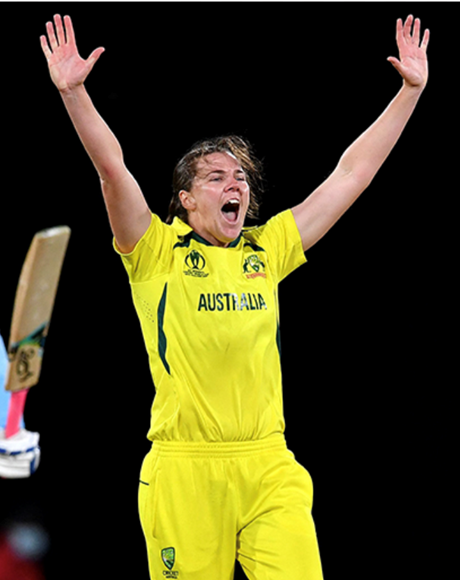
  • SA’s national players in 2023 are: Tahlia McGrath, Amanda-Jade Wellington, Megan Schutt and Darcie Brown. 
  • On average SA players receive $151,000 – Most play in both the WNCL (50 over game) and the WBBL (20 over game).
  • Player contracts also include parental leave.
  • At the final of the ICC World Cup played at the MCG in 2020, in front of 86,174 people, several records were smashed:
  1. Highest attended women’s sporting fixture in Australia,
  2. Second highest attended women’s sporting fixture worldwide,
  3. Highest attended women’s cricket match worldwide,
  4. Highest attended T20 cricket match, men’s or women’s, worldwide.

RECORDS. MILESTONES. MOMENTS.

1877

It is reported that the first women’s match in SA took place at a Gawler Church picnic.

1948

Bobby Milburn broke new ground by being the first women’s sport commentator in SA, remaining in that ABC role until the 1960s.

86,174

In front of 86,174 spectators, the 2020 ICC World Cup at the MCG, was the highest attended women’s sporting event in Australia, and second highest women’s sporting event worldwide.

HISTORICAL TIMELINE

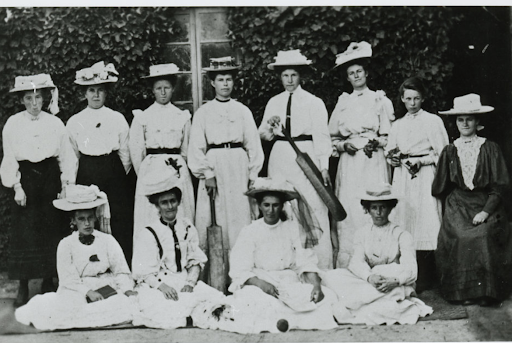
Ladies Cricket Team from Port Elliot 1908 Source: State Library of South Australia, B 23843

1877

Reportedly the first women’s match in SA took place at a Gawler Church picnic. 

1930's

  • The first meeting of the South Australian Women’s Cricket Association was held at the YWCA in September 1930. There were initial disagreements about what women would wear – and despite some protests from men about being ‘invaded’ by women – the association held its first season over the proceeding summer.
  • The Australian Women’s Cricket Council formed in 1931. 
  • The impetus for the interest and growth in women’s cricket came predominantly from women who played hockey. Associations began to be formed around the state.
  • Public Opinion – The Observer: ‘I regret to notice that girls have taken to playing cricket. It is not a suitable game for girls, and it is to be hoped that parents will give their daughters no encouragement to play it. Although a women’s cricket association has been formed it is satisfactory to know that it is not officially recognised by the controllers of cricket in this State. I trust that there will be no change in the official attitude…A single blow on the body from a hard ball might easily render a girl unfit to shoulder the serious responsibilities of life’.
  • Despite this sentiment, SA sent its first team to the national championships in 1935, and left arm bowler Sue Summers was selected in Australia’s first tour to England in 1937.  She was the first South Australian female cricketer to represent the nation.
  • Journalist and women’s sport advocate, Lois Quarrell led the organiaation of a celebrities’ cricket match at Unley Oval to help Sue Summers raise the 120 pounds needed to represent her country.

1940's

  • Competition was played on old, cracked concrete pitches. The boundary was marked with small red flags, which the players pegged out themselves before playing, but the ground was rough and largely covered with long grass. 
  • Fielding was dangerous as the ball could hit clumps of grass and fly around. Cow pats were also removed before play.
  • These playing conditions in the parklands largely continued to prevail until the late 1960s.

1950's

  • In 1958, concerned about the lack of recreation space for women and girls, the industrious and entrepreneurial May Mills persuaded then Premier Thomas Playford to grant the area now known as the Women’s Memorial Playing Fields to help rectify the situation.
  • Today’s even green fields and well-tended turf pitches graced by the May Mills Pavilion have come a long way from 1958.
  • Uneven land covered with rocks and an almond orchard were transformed by May’s determination and innovative organising skills.
  • Working bees of volunteer sportswomen were organised to clear rocks and harvest almonds. Machinery companies were offered the opportunity to demonstrate their machines’ capabilities with Ópen Days’, but the trade-off being the requirement to level and grade the area. In the late 1960’s the first turf pitch finally saw action.
  • Adelaide University and Teachers College were important acquisitions for the competition as they both provided turf grounds.
  • Mavis Burke and Lorna Easter were members of the first official SA state team in 1934 season and played until 1952: a remarkable 18-year span.
  • Despite cricket’s progress, skills were “quite elementary, if that.” Most women hadn’t played cricket at school. 
  • On interstate trips, state players sat up on overnight trains, reducing their personal costs.
  • Game development was fragmented due largely to society’s expectations that once married, women would stop work and sport. Careers generally lasted just 5 years.
  • Cricket was heavily impacted because games took 5-6 hours, a long time for women to be away from their domestic responsibilities.
  • The International Women’s Cricket Council was established in 1958. 

1960's

  • Saturday morning schoolgirls competitions began courtesy of enthusiastic PE teachers and supportive fathers.
  • Through the 60s and 70s, several prominent players emerged who played both cricket and hockey at State level: Val Nairn, Jill Need (who also played cricket for Australia), and Marj Wincup. 
  • In 1979-80, Jill Need would go on to coach SA to their first Australian Women’s Cricket Championship in 30 years.

1970's

  • Early signs of commercial investment in women’s sport emerged, thanks largely to the efforts and motivation of one of SA’s and Australia’s leading administrators/coaches/PE teacher and advocates for the women’s game, Chris Garwood. 
  • Chris negotiated sponsorship and sourced coaches for residential coaching clinics at the Parks Community Centre. Coaches co-opted for these camps included English Test spinner, Tony Lock, English Team Manager and MCC accredited coach, Norma Izard, SA sportsman and PE lecturer, John Halbert, with Test umpire Tony Crafter conducting evening umpiring sessions.
  • These Co-op Coaching Clinics identified players including wicket-keeper Tunde Juhasz and Leanne Hunter 1985-96)
  • Later, in the 1990s, a liaison with Barry Robran at Foundation SA, enabled the sponsorship to employ outstanding player, Jo Broadbent , as SAWCA’s Development Officer. 
  • Jo Broadbent would go on to make a significant contribution to the development of SAWCA’s youth programs and later established herself as an outstanding coach at senior international level.

1980's

  • The Coop Coaching Clinics of 1983, 84 and 85 identified players including wicket keeper Tunde Juhasz (3 Tests), Andrea McAuley (One Test, SA captain and later head coach), Leanne Hunter (Two Tests & 24 One Day Internationals 1985-1996.)
  • Leadership also came from SA Senator, Rosemary Crowley, and SA Minister of Education, Sue Lenehan, who activated the Women’s Sport Promotion Unit, elevating the visibility of girls playing sport.
  • The Australian Women’s Cricket Council became Women’s Cricket Australia. Belinda Clarke who helped develop nation-wide programs for girls was appointed CEO.
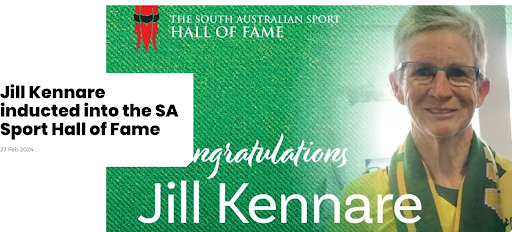
  • In SA, a group of athletic, confident young women was coming through the PE Teachers College system – featuring Jenny Williams, Jill Kennare, Wendy Piltz, and Lyn Fullston – strengthening SA’s competition.
  • The 1982 World Cup team had three SA reps: Fullston, Kennare, and Jenny Jacobs.
  • Major corporations – Shell and the Commonwealth Bank – funded major national competitions and coaching clinics.  
  • Denis Brien, a teacher/school counsellor/club cricketer was appointed SA coach prior to the 1987-88 season, after Jill Kennare insisted he apply for the position. 
  • Denis Brien focussed on improving the players’ technical skills and helped make rapid progress. 
  • He set out new regimes for skills coaching and through his SACA contacts, gained access to train on turf wickets for net practice, and including West Torrens which had never been accessible to female players prior to this.
  • He also gained access to conditioning programs through the SASI facility.
  • Denis Brien opened the way forward for women cricketers. In his personable but unswerving manner, he demonstrated to the unprogressive elements in cricket that women were highly skilled and capable if given the support and opportunity.
  • In addition, the Sex Discrimination Act was passed which offered women greater support and opportunity in workplaces largely.
Denis Brien
Denis Brien Source: Supplied by Denis Brien

1990's

  • Even in the 1990s, some players were still being harassed when playing cricket. 
  • In 1990 a Foundation SA Development grant of $60,000 over three years was secured, a sizeable figure for the times. 
  • With more professional training – even compared with the men’s State team – access to modern and appropriate facilities, and improved coaching direction, the players’ skills improved. 
  • Andrea McCauley took over the captaincy and with Denis Brien as coach, the team formed a united, professional outfit. 
  • Players – McCauley, Joanne Broadbent, Leanne Hunter, Tunde Juhasz, Isobelle Tsakiris, Caroline Ward and Alysson Kennelly and Melissa Cann (Caffrey) all were national squad or national team players during the 90s. One youngster, Karen Rolton, was just emerging.
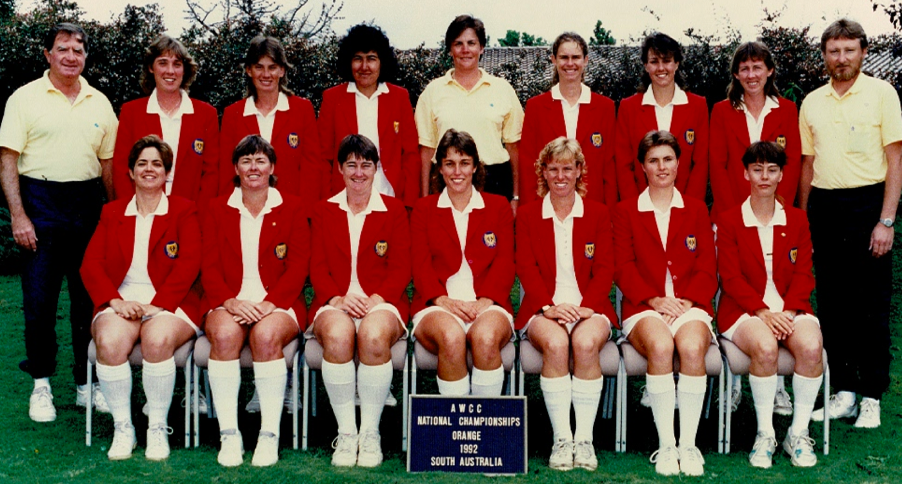
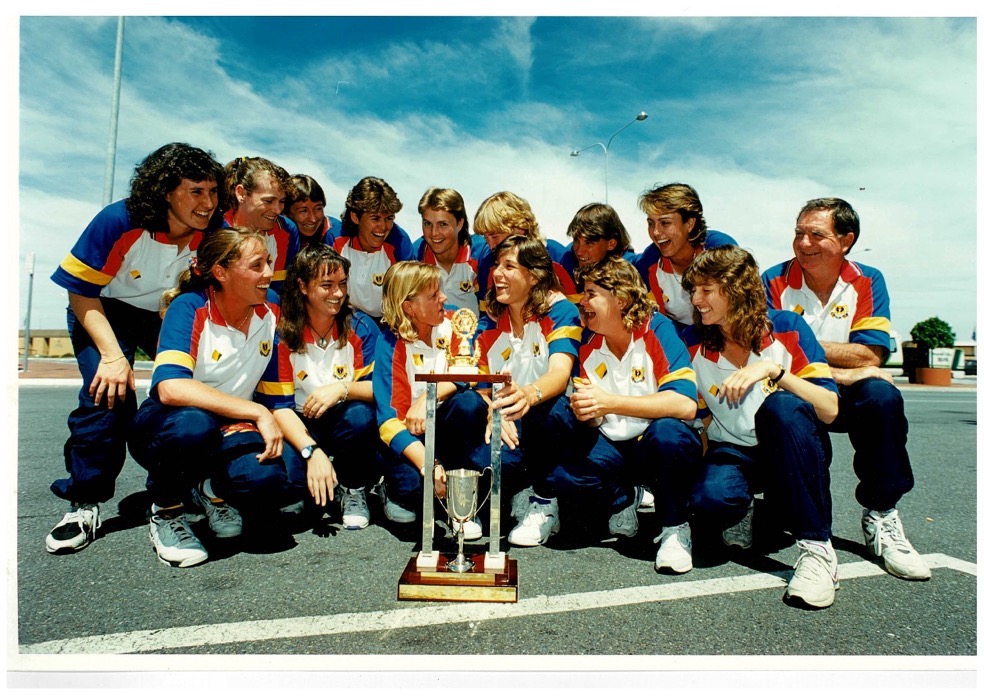
  • SA established itself as a national powerhouse – winning three national championships in four years from 1990 to 1995 – establishing what is now known as “The Golden Era”. 
  • The team rose to be the most successful cricket team SA has produced, men or women.
  • With Brien coaching and Andrea McCauley captaining on-field and leading off-field, SA was a potent force nationally. 
  • This team, under this leadership, was inducted into the SA Sports Hall of Fame in 2025.
  • Brien describes McCauley this way, “The key to the success was undoubtedly the astute leadership of Andrea McCauley. I rank her alongside Ian Chappell, Darren Lehmann and David Hookes as the best captains I’ve been associated with.”
  • She was appointed to the SACA Board in 2019. 
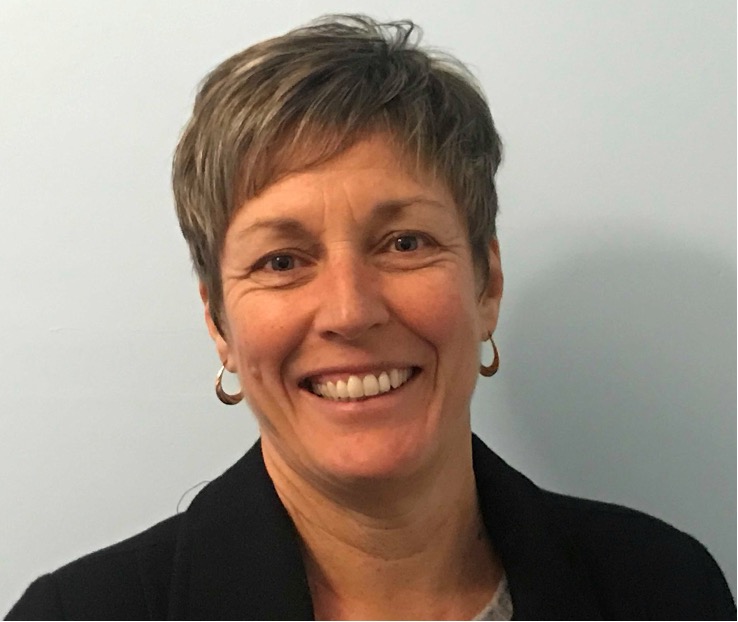
  • Andrea McCauley is a self-employed mortgage broker and holds a diploma in Financial Services (Finance/Broking Management). She was the first female Head Coach of the SACA Female High Performance program and the inaugural Coach of the WBBL Adelaide Strikers. 
  • The 1995 team was a power-packed one: Andrea McCauley, Joanne Broadbent, Lee-anne Hunter, Tunde Juhasz, Karen Rolton, Isabelle Tsakiris, and Caroline Ward – all of whom had previously or would represent Australia.
  • In 1996, the Australian championships were replaced by the Women’s National Cricket League – seven states plus ACT.
  • SA becomes the Scorpions, based around the SA men’s team, Redbacks. The Women’s National Cricket League (WNCL) and Women’s Big Bash League (WBBL) were established.
Victorious State team 1992 - Supplied by Andrea McCauley 
Victorious State team 1994-95 - Supplied by Andrea McCauley.
Andrea McCauley - Supplied by Andrea McCauley.  

2000's

  • The ACB and Women’s Cricket Australia merged. By 2005-06 all States have merged: SACA absorbed the SA Women’s Cricket Association. 
  • Outstanding players Karen Rolton and Emma Sampson helped lead the Port Adelaide Club to multiple premierships early in the 21st Century. 
  • In the early 2000s Port Adelaide won six of the first seven A Grade Premierships of the century, missing only in 2004-05. Two years prior, Port became the first club in the competition’s history to win all three grades (A & B grades plus T20) in one season.
  • Through the early 2000s, Karen Rolton and a country kid, Shelley Nitschke, came to the fore in SA, both ultimately played for Australia.

2010's

  • In 2014-15, Andrea McCauley is appointed full-time coach, becoming national champions in 2015 with Lauren Ebsury as captain. 
  • Through those years, Tahlia McGrath, Amanda Jade Wellington, Megan Schutt, Tegan McPharlin, and Bridgette Patterson developed into outstanding players. Shelley Nitschke was assistant coach.
  • In the six years to 2019, McCauley oversaw the appointment to the women’s program of: 
  1. full-time assistant coach, 
  2. full-time physiotherapist, 
  3. full-time strength and conditioning coach, 
  4. full time player development officer, 
  5. and full-time operations manager.
  • “It took a lot of fighting” … says McCauley. But SACA CEO Keith Bradshaw was also supportive of the changes. Equally, Cricket Australia began to focus on greater promotion of women.

2020's

  • In 2023 the Scorpions are said to have the best high-performance program in Australia. Pathway systems are healthy from U16s to U19s state teams.
  • With Luke Williams as head coach and Tahlia McGrath as captain, the Strikers win the 2023 WBBL title, having been runner up in 2022.
  • Katie Mack led the run scorers for SA in 2023, averaging 32 per game.
  • The SACA has four females of its 11 members on the SACA Board. “There’s been a massive culture change, observed McCauley.
  • South Australian cricketers Darcie Brown and Amanda Jade Wellington have featured in the national team during the 2010s and 2020s.

Bibliography:

Breaking boundaries: early women’s cricket in South Australia, State Library of South Australia, <https://www.slsa.sa.gov.au/breaking-boundaries-early-womens-cricket-south-australia> 

Wikipedia, South Australia women’s cricket team, <https://en.wikipedia.org/wiki/South_Australia_women> 

Jan 28 2015, InDaily, The golden era of SA Women’s cricket, <https://www.indailysa.com.au/news/archive/2015/01/28/the-golden-era-of-sa-womens-cricket> 

Georgia Wilson, 8 March 2015, Howzat: Showcasing 140 years of female cricketing history in Australia, ABC News, <https://www.abc.net.au/news/2015-03-08/140-years-of-women-playing-cricket-in-australia/6283406> 

Women’s Cricket, Adelaide Cricket Club, <https://adelaidecricketclub.org.au/womens-cricket-2/> 

Dot Laughton Retires Happily (1953, May 1). The Advertiser (Adelaide, SA : 1931 – 1954), p. 11, <http://nla.gov.au/nla.news-article48294186> 

14 Dec 2025, wikipedia, Dot Laughton, <https://en.wikipedia.org/wiki/Dot_Laughton> 

25 June 2025, wikipedia, Faith Thomas, <https://en.wikipedia.org/wiki/Faith_Thomas> 

AdelaideAZ, Faith Thomas the first Aboriginal woman to represent Australia in sport at cricket; hockey for South Australia, <https://adelaideaz.com/articles/faith-thomas-the-first-aboriginal-woman-to-represent-australia-in-sport-at-cricket–played-hockey-for-south-australia> 

Grokipedia, Wendy Blunsden, <https://grokipedia.com/page/wendy_blunsden> 

Nov 30 2018, Howzat? It took a while but the cricket world is open to women too, The Advertiser, <https://www.adelaidenow.com.au/lifestyle/sa-weekend/howzat-it-took-a-while-but-the-cricket-world-is-open-to-women-too/news-story/ddf8140fa9b2f4d9210af419e50196d8> 

Grokipedia, Lyn Fullston, <https://grokipedia.com/page/lyn_fullston> 

Wikipedia, Lyn Fullston, <https://en.wikipedia.org/wiki/Lyn_Fullston> 

27 Feb 2024, Jill Kennare inducted into the SA Sport Hall of Fame, South Australian Cricket Association, <https://www.saca.com.au/news/3913497/jill-kennare-inducted-into-the-sa-sport-hall-of-fame> 

Avenue of Honour, South Australian Cricket Association, <https://www.saca.com.au/about/honour-board/avenue-of-honour> 

Grokipedia, Joanne Broadbent, <https://grokipedia.com/page/joanne_broadbent>

The Sport Performance Summit, Leaders in Sport, Shelley Nitschke, <https://leadersinsport.com/performance-institute/leaders-events/leaders-in-australia-2025/speakers-2/shelley-nitschke/> 

Updated 16 January 2026, Wikipedia, Shelley Nitschke, <https://en.wikipedia.org/wiki/Shelley_Nitschke> 

John A Daly, May 1994, Against the odds: A pictorial history of 100 years of South Australian Women in Sport and Recreation, Women’s Suffrage Centenary, Government of South Australia. 

Tanya Tarnogursky, July 1992, South Australian Women in Sport, Gilligan Printers Pty Ltd of Adelaide. 

Grokipedia, Andrea McCauley, <https://grokipedia.com/page/andrea_mccauley> 

Updated 16 January 2026, Wikipedia, Karen Rolton, <https://en.wikipedia.org/wiki/Karen_Rolton> 

coxarchitecture.com.au, Karen Rolton Oval at Narnungga Park 25, <https://www.coxarchitecture.com.au/project/karen-rolton-oval-at-narnungga-park-25/>

Cricket.com.au, Megan Schutt, <https://www.cricket.com.au/players/CA:661/megan-schutt> 

Updated last 11 March 2026, Wikipedia, <https://en.wikipedia.org/wiki/Megan_Schutt> 

Commonwealth Games Australia, Tahlia McGrath, <https://commonwealthgames.com.au/athletes/tahlia-mcgrath/> 

Cricket.com.au, Tahlia McGrath, <https://www.cricket.com.au/players/CA:1028/tahlia-mcgrath> 

K-Zone.com.au, Meet Tahlia McGrath: Aussie Cricketer, <https://www.kzone.com.au/article/meet-tahlia-mcgrath-aussie-cricketer-582452> 

STORIES OF OUR PIONEERS

Meet the trailblazers of SA Cricket. 

Bobby Milburn

Bobby Milburn

A skilful medium-pace bowler, Bobby Milburn played for Australia for over a decade in the...

Chris Garwood

Chris Garwood was a major inspiration in helping grow SA women’s cricket as a player,...

Dot Laughton

In 1949, Dot Laughton hit a State and believed to be an Australian record of...

Faith Thomas (Coulthard)

Faith Thomas (nee Coulthard) was the first Aboriginal woman or man to represent Australia in...

Jill Kennare

Jill Kennare

Jill Kennare was the first Australian Test player – man or woman – to score...

Joanne Broadbent

Through her playing career, Joanne Broadbent purposefully spent time with her numerous coaches, seeking out...

Karen Rolton

Karen Rolton

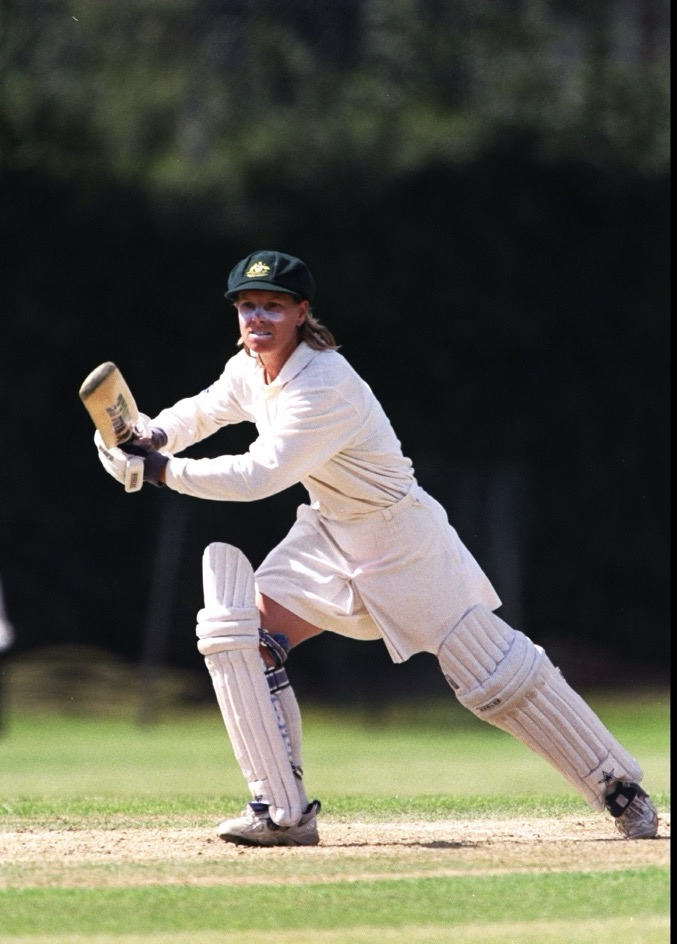
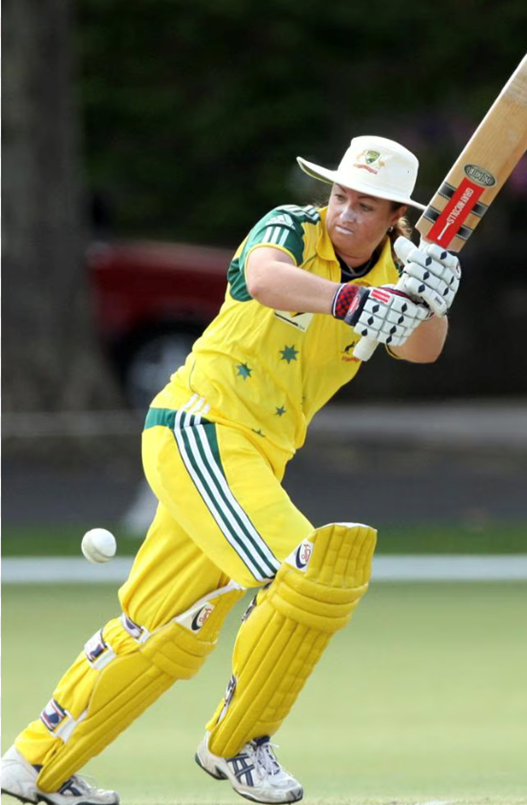
Karen Rolton is considered one of Australia’s finest cricketers – male or female – and...

Lyn Fullston

Lynette Fullston

Lefty, a left-arm spinner, won the Player of the Series at the Women’s Cricket World...

Megan Schutt

Megan Schutt

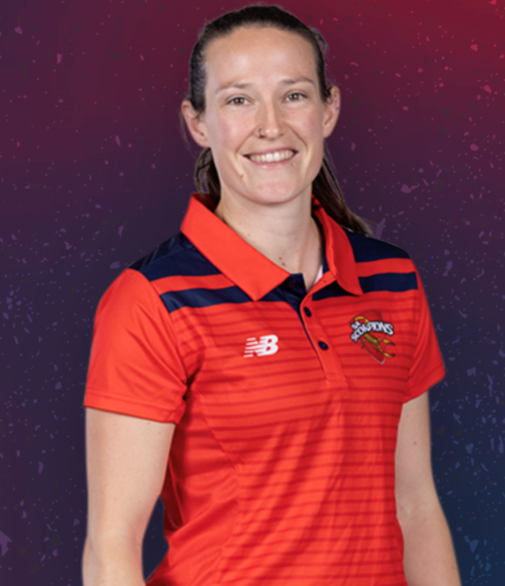
In 2017, she was named in the ICC Women’s T20 International Team of the Year.
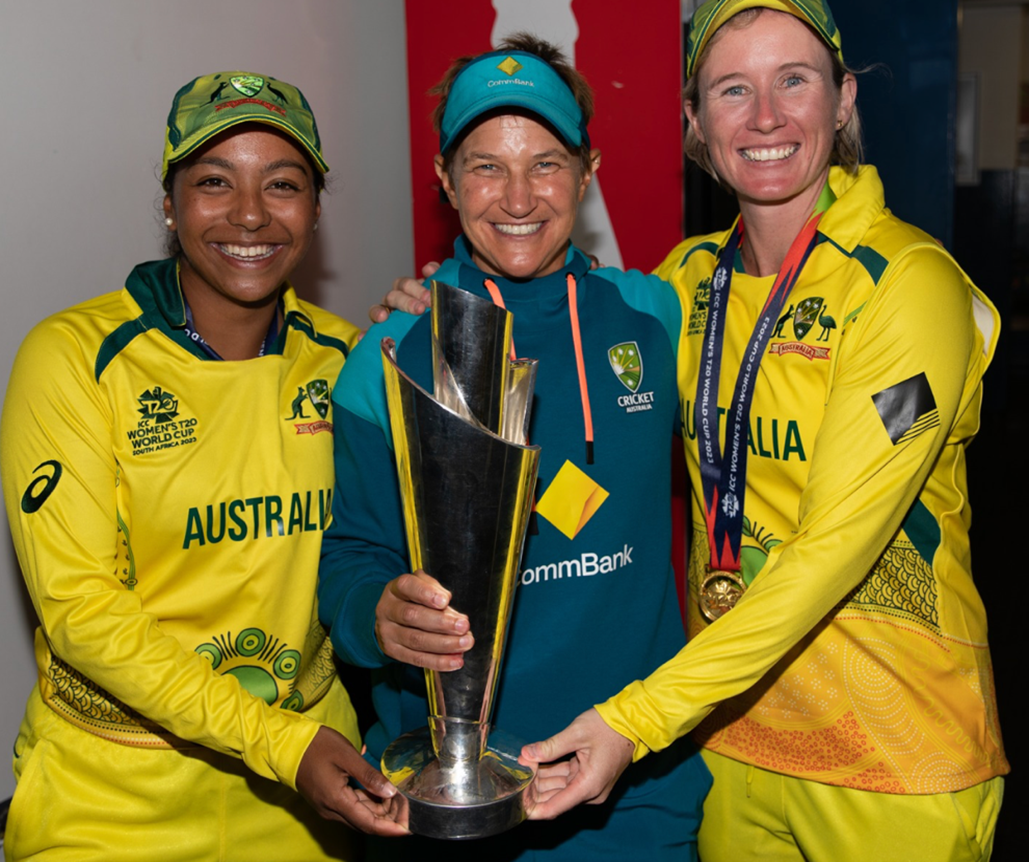
Shelley Nitschke

Shelley Nitschke

Shelley Nitschke was a late starter, playing her first State game at 24 but eventually...

Talia McGrath

Tahlia McGrath

In 2024, her cricketing services were purchased by the UP Warriorz in Bengalore in India’s...

Wendy Blunsden

When the letter arrived notifying Wendy Blunsden of her Australian selection, she said it was...