
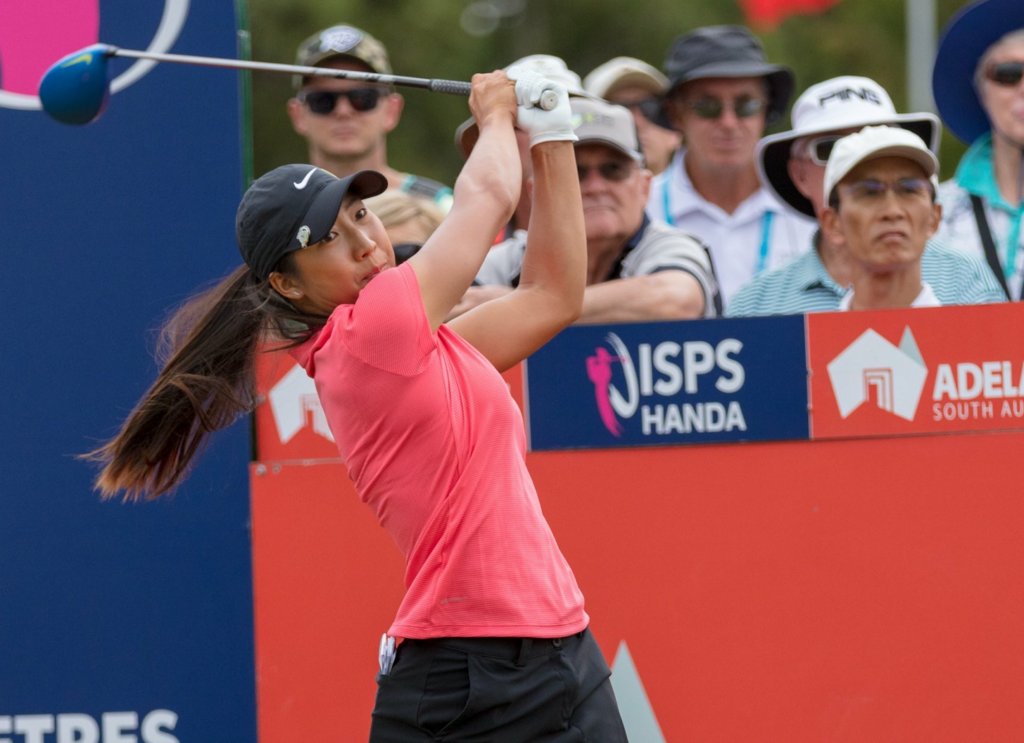
With its increasing popularity, each state formed its own Ladies Golf Union. Australia became one of the few countries in the world where women’s golf was entirely controlled by women.
Australian Karrie Webb is currently the third placed highest female money earner with $20,000,000 of prizemoney.
Marjorie Ridgway was elected President of the SA Ladies Golf Union. Giving outstanding service and leadership, she served in this position for 29 consecutive years, until 1964.
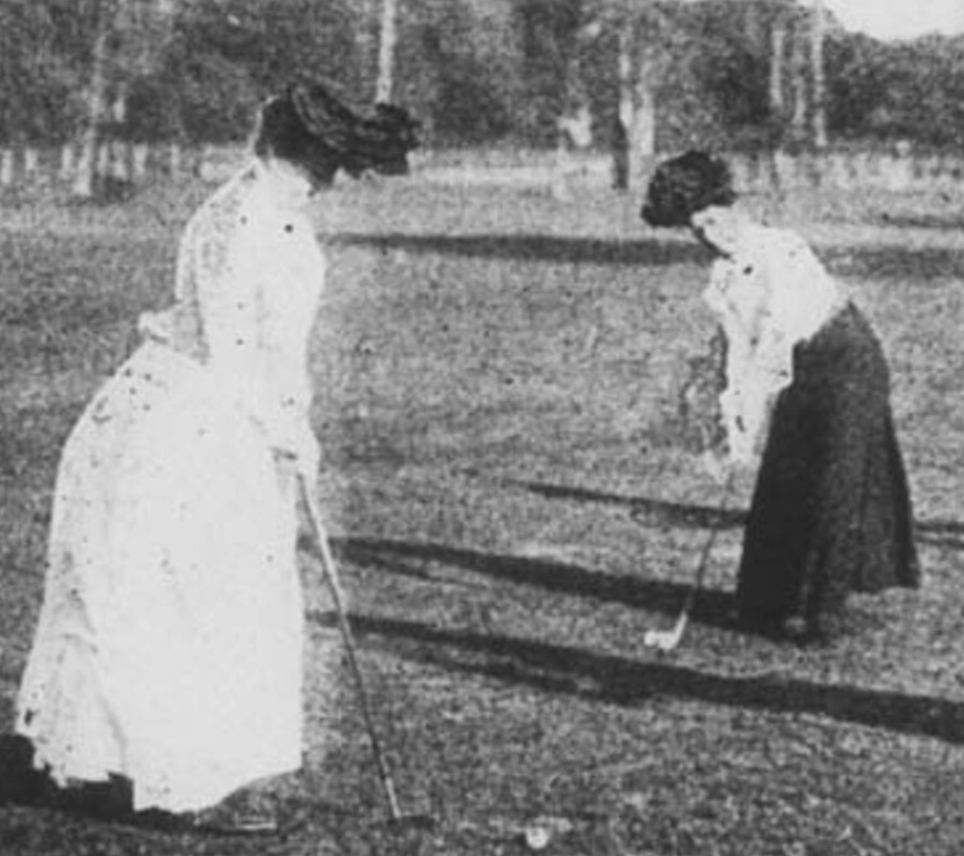
Tournaments for women were organised by the SA Golf Association from 1905 to 1929, and it is known that members of the Adelaide Ladies Golf Club were admitted to the Adelaide Golf Club as Associate Members in 1907.
In 1929, the SA Ladies Golf Union was established, from then on controlling its own operations.
The North Adelaide Golf Club was officially opened in 1905 and within four years there were more female members than male: 56 to 50.
After a hiatus of 22 years, the Adelaide Golf Club was re-formed in the North East Park Lands in 1894, moved to Glenelg in 1896 and then to Seaton in 1906. In 1923, the club was granted Royal status and became the Royal Adelaide Golf Club.
Some of the regular female players throughout this decade were: Florence Ayers (aka Mrs Maxwell Fowler), Constance Trew (aka Mrs Julian Ayers), Elizabeth Margaret Wake, (aka Mrs Gordon Ayers) and Sylie Blue aka Shylie (aka Mrs Herbert Rymill).
A limit of 30 was set as the highest official handicap.
On 3 May 1906, the North Adelaide, Adelaide and Glenelg Golf Clubs co-funded the services of a golf professional. The game was now becoming organised, competitive and nationally sanctioned.
The official opening of the Adelaide Golf Club at Seaton took place in 1906. Female members, soon after referred to as “associates” were described as wearing the following: “navy cloth costumes, scarlet facings to the firmly fitting Norfolk Jackets, large navy caps worn flat or at rakish angle, high starched collars with bow ties, short skirts fully one inch from the ground and neat lace-up tan boots.”
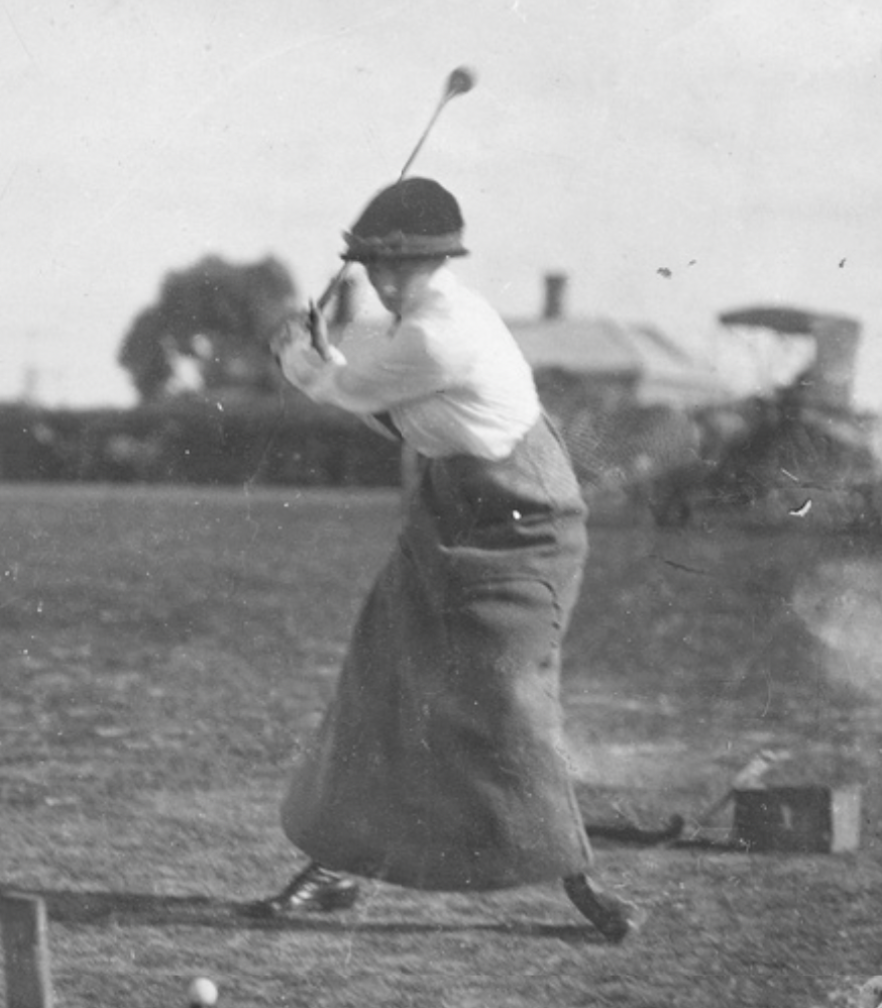
In September 1920, the long-awaited Australian Ladies Golf Union was established, but it took a further five years before SA affiliated.
SA was the last State to join.
The South Australian Ladies Golf Union was finally formed in 1929. Before this, women’s golf championships and any associated activities in SA were conducted under the auspices of the South Australian Golf Association (SAGA) from 1905.
It had been Mrs Shylie Rymill and Miss Ethel Wyatt who were the main instigators of creating the SA Ladies Golf Union.
Shylie’s husband, Herbet Lockett ‘Cargie’ Rymill had been responsible for maintaining the links at the Adelaide Golf Club. He was also the founder of the Kooyonga Golf Club and the architect of the links there.
In 1923 the Adelaide Golf Club was conferred the title of Royal. Every capital city in Australia then had a golf club with the title Royal associated with it – apart from Darwin.
Also in 1923, the first Australian championships for women were also held under the auspices of the Australian Ladies Golf Union.
SA’s Lily Gordon won the national title in 1923, the year it was played at the Royal Adelaide Golf Course.
Remarkably, more than 100 years later, Lily Gordon remains the only SA female to have won the national amateur title.
Women were restricted to using three or four clubs, perhaps a spoon, mashie, putter and a long mid-iron – all with leather grips – as more would make the bag too heavy to carry.
There were no tees, instead a little pile of sand was used for teeing, and a can of water was placed near the green to wash the ball.
The advent of the Kooyonga Club added to numbers of “associates”, prompting
interclub competitions to be arranged.
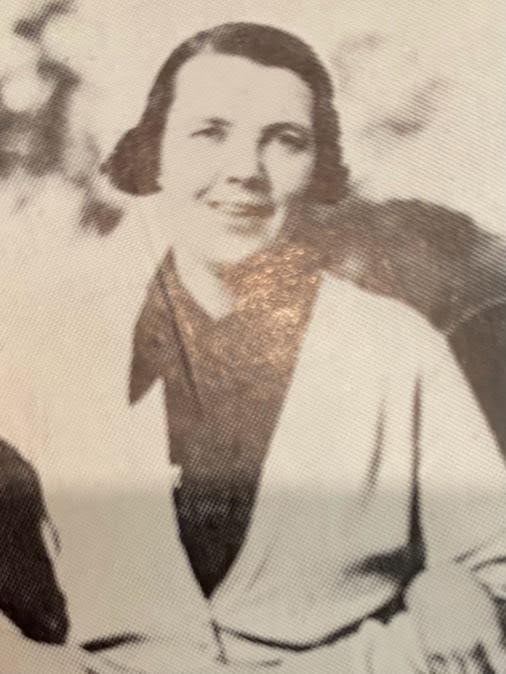
In 1950 Australia sent its first official touring team overseas. The team comprised eastern states players with no South Australian representatives.
Three years later Australia had its first competition against South Africa in a series of matches played in Australia. Australia and South Africa exchanged visits until 1969.
Rhonda Watson won five of her 12 State women’s titles in the 1950s, her first in 1952.
By the 1950s, several golf clubs or country clubs were thriving including Barossa
Valley (1904), Mt Gambier (1909), Pt Lincoln (1915), Berri (1924), Port Augusta (1926).
By 1951, the number of affiliated clubs had more than doubled since 1946.
SA State players were given a 25-Pound subsidy to assist with uniforms and travel expenses. By the mid 50s, this had risen to 59 Pounds.
Attempts were being made to interest schoolgirls and young women in the game.
The Ladies Professional Golf Association (LPGA), established in 1950, is one of the longest-running women’s professional sports associations in the world and has its HQ in Florida.
In 1963 several overseas golfers competed in the Australian championships for the first time, the women coming from Canada, USA and Great Britain.
Rhonda Watson absolutely dominated SA women’s golf during this decade, winning her first state championship in 1961 then six in a row. A loss followed in 1967, but she returned to the podium with a victory in 1968.
Clinics for juniors and schoolgirls were being held with competitions being sponsored by Ansett. An interstate competition between SA and Victoria was set up.
Glenelg and Royal Adelaide Clubs hosted the Australian Amateur Championships in 1962 and 1967.
These tournaments retained their amateur status despite the LPGA establishing
professional tournaments around the world.
After 29 years of leadership of the SA Ladies Golf Union, Marjorie Ridgway stepped down, replaced by Jean Angove.
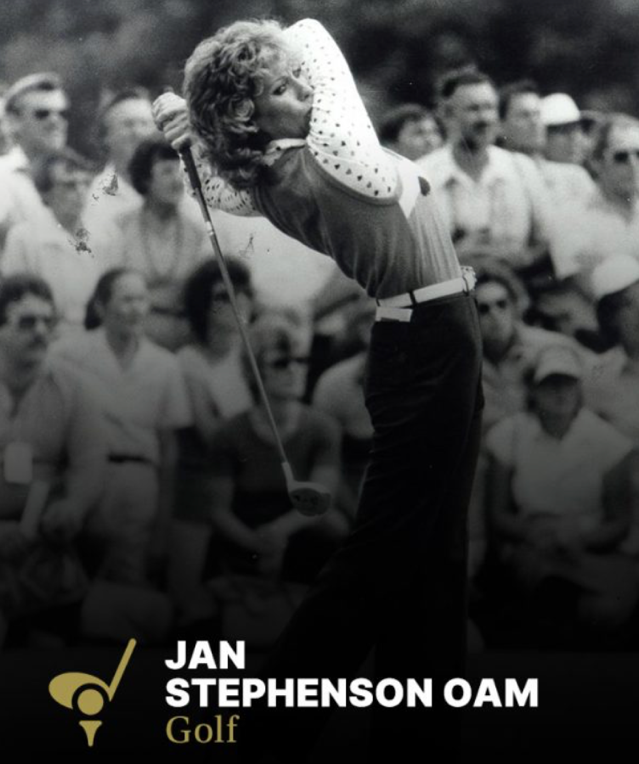
The Equal Opportunities Act (SA) passed in 1984 required, among other things, that men and women be given equal rights in golf clubs.
By now, Adelaide featured multiple well established and well utilised golf courses including Flagstaff Hill, Thaxted Park, Blackwood, Mt Osmond, Tea Tree Gully, and Marino.
A new golfer, Jan Dale, was making her mark on golf courses in South Australia, winning four SA titles in the 1980s, first in 1983, then two years later, she won three consecutive titles.
Her predecessors, Sue Tonkin and Jane Crafter, both won one SA title each during the 1980s.
A new Pennant Golf format was introduced in 1982, with the competition extended to four grades. Each of the six clubs involved could field one team in each grade.
Many working women had their playing opportunities restricted because of a ban on women playing on the weekends, however for its 60th birthday celebrations, The Grange Club in 1986 permitted women to play on Saturdays for the first time for many years.
The number of Australian women playing golf sat at about 20 per cent of golf club members nationally, declining in particular over the last two decades.
The sport’s national body and local clubs established new initiatives to drive change, including changing perceptions about golf.
“Women and girls still think golf is a sport for old males,” was the view of the national body at the time.
Royal Adelaide Golf Club was tracking above average, with 30 per cent of its memberships held by females, after allowing women access to Category 1 (full) membership.
The new national body, Golf Australia, supports the state associations Golf NSW, Golf NT, Golf Qld, Golf SA, Golf Tasmania, Golf Vic, and Golf WA – who are responsible for the governance, delivery and direction of golf in their State.
Since 2018, Golf SA staff have been employed by Golf Australia Ltd as part of the above national “One Golf” services agreement.
With golf being readmitted back into the Olympic fold at the 2016 Summer Olympics, the role of Golf Australia was strengthened further. As part of this the Australian Sports Commission raised the funding to the sport in April 2011.
Bibliography:
Todd Kelly, Nov. 29, 2025, LPGA all-time money list is topped by Annika Sorenstam, Lydia Ko, Golfweek <https://golfweek.usatoday.com/story/sports/golf/lpga/2025/11/29/lpga-all-time-money-list-annika-sorenstam-lydia-ko-karrie-webb/87484269007/>
Karrie Webb, LPGA, <https://www.lpga.com/lpga-hall-of-fame/karrie-webb>
Updated 5 February 2026, wikipedia, Women’s major golf championships, <https://en.wikipedia.org/wiki/Women%27s_major_golf_championships>
January 30, 2026, Sarah Kellam, Major Championships Promise to Thrill in 2026, LPGA, <https://www.lpga.com/news/2026/major-championships-promise-to-thrill-in-2026>
Feb 8, 2017, Associated Press, U.S. Open increases purse to golf-high $12 million, ESPN, <https://www.espn.com.au/golf/story/_/id/18644161/us-open-purse-becomes-richest-12-million>
Uma Gurav, 7 Nov 2024, PGA Tour caddie reveals exactly how much money he earned working for 110th ranked golfer, Talk Sport, <https://talksport.com/golf/2237089/pga-tour-caddie-bryan-kopsick-ben-silverman-salary/>
Jessica Marksbury, OCTOBER 15, 2018, Big-time bucks: Here’s how much money is made (and paid) by the average Tour pro, <https://golf.com/travel/big-time-bucks-heres-how-much-money-is-made-and-paid-by-the-average-tour-pro/>
September 01, 2017, About Golf SA, Golf Australia <https://archive.golf.org.au/2021/02/about-golf-sa/>
Updated 12 February 2026, wikipedia, History of Golf <https://en.wikipedia.org/wiki/History_of_golf>
The 19th Hole Staff, September 28, 2022, Mary, Queen Of Scots, The Empress Of Golf, <https://19thholemag.com/mary-queen-of-scots-the-empress-of-golf/>
History of Golf in South Australia, North Adelaide Golf Club, <https://www.nagc.org.au/our-club/history/history-of-golf-in-south-australia>
Updated 9 September 2025, wikipedia, Australian Women’s Amateur, <Australian Women’s Amateur – Wikipedia>
History Of Women’s Golf Australia, Golf Society Of Australia, PDF,<https://static.golf.com.au/clubs/1000/uploads/resources/history_of_women_s_golf_australia.pdf>
Carla Horvath, 25 June 2019, The evolution of women in golf, Centennial Parklands, <https://www.centennialparklands.com.au/stories/2019/the-evolution-of-women-in-golf>
Copyright Womens Golf History 2026, Golf Australia and Women’s Golf, Golf Australia, <https://womensgolfhistory.com/foundation/organisations/amateur-bodies/golf-australia/>
Andrew Baker, 1956, Florence Fowler’s Scrapbooks, <PDF, https://fleurieuhickorygolfers.org/>
Updated 25 March 2026, Henry Ayers, <https://en.wikipedia.org/wiki/Henry_Ayers>
Kirby Fenwick, September 8, 2020, Five stories from the history of women’s golf, Siren, <https://sirensport.com.au/golf/five-stories-from-the-history-of-womens-golf/>
History, Royal Adelaide Golf Club, <https://www.royaladelaidegolf.com.au/cms/about/history/>
Sarah Proctor, 6 July 2022, History Of Womens Golf Fashion, We Women Golf, <https://www.wewomengolf.co.za/golf-fashion/>
Golf Championships. (1910, June 14). Kalgoorlie Western Argus (WA : 1896 – 1916), p. 40. <http://nla.gov.au/nla.news-article33367355>
Michael Trostel, April 25 2017, 100 Years Ago: The U.S. Open Stops for World War I, USGA, <https://www.usga.org/content/us-open/2017/articles/100-years-ago–the-u-s–open-stops-for-world-war-i.html>
Brent Kelley, August 23, 2024, Do You Know the Names of Old Golf Clubs?, trip savvy, <https://www.tripsavvy.com/do-you-know-the-names-of-old-golf-clubs-4072148#>
Joyce Gibberd, 2002, Henry Way Rymill (1907–1971), Australian Dictionary of Biography, <https://adb.anu.edu.au/biography/rymill-henry-way-12102>
Shylie Rymill Foursomes, Flagstaff Hill Golf Club,<https://www.fhgc.com.au/shylie-rymill-foursomes/>
Updated 15 March 2026, wikipedia, Shylie Katherine Rymill, <https://en.wikipedia.org/wiki/Shylie_Katherine_Rymill#>
18 February 2020, 2020 WOMEN’S STATEWIDE EVENTS, Golf Australia, <https://archive.golf.org.au/wp-content/uploads/2020/11/00046472-source.pdf>
Joyce Gibberd, 2002, Shylie Katharine Rymill (1882–1959), Australian Dictionary of Biography, <https://adb.anu.edu.au/biography/rymill-shylie-katharine-11600#>
Neil Crafter, Great Golf Course Architects – H.L. ‘Cargie Rymill, Golf Architecture Magazine, <https://www.ausgolf.com.au/golf-course-architectshl->
Updated 13 November 2025, wikipedia, Royal Adelaide Golf Club, <https://en.wikipedia.org/wiki/Royal_Adelaide_Golf_Club>
Updated 9 February 2026, wikipedia, Women’s golf in Australia, <Women’s golf in Australia – Wikipedia>
Marjorie Ridgway, 1973, South Australian Golf, 1869-1970, A history of South Australian golf.
Grokipedia, Lady Hilda Madeline Britten-Jones, <https://grokipedia.com/page/lady_hilda_madeline_britten_jones>
Good Golf At Glenelg (1936, July 29). The Advertiser (Adelaide, SA : 1931 – 1954), p. 14. <http://nla.gov.au/nla.news-article48165180>
Mrs. Britten-Jones Beats Miss Rymill (1934, July 7). The Advertiser (Adelaide, SA : 1931 – 1954), p. 10., <http://nla.gov.au/nla.news-article35118609>
Geoffrey H. Manning, Grange Golf Club Inc. 1997, A History of the First 70 Years 1926-1996, The Grange Golf Club, PDF, <Grange-Golf-Club-searchable.pdf>
23 November 2019, A tribute to… Rhonda Gladys Watson OAM, My Tributes, <https://www.mytributes.com.au/obituaries/rhonda-gladys-watson-oam-1929-2019/3887224/>
29 June 2021, Glancing Back – A Short History of Women’s Professional Golf, Women’s Golf Magazine, <https://www.womensgolfmagazine.com.au/latest-news/glancing-back-a-short-history-of-womens-professional-golf/>
2 September 2025, Rhonda Watson Brooch – 2025 Results, Glenelg Golf Club, <https://www.glenelggolf.com/cms/2025/09/rhonda-watson-brooch-2025-results/>
Golf Australia, 21 April 2024, Golf Australia launches School Experience Clinic program, Golf.com.au, <https://golf.com.au/news/golf-australia-launches-school-experience-clinic-program>
Updated 15 March 2026, wikipedia, Women’s Australian Open, <Women’s Australian Open – Wikipedia>
Jan Stephenson, LPGA, <https://www.lpga.com/athletes/jan-stephenson/81920/bio>
Sue Tonkin Medal (Women), Kooyonga Golf Club, <https://www.kooyongagolf.com.au/cms/events/event/sue-tonkin-medal/>
March 2019, Australian Human Rights Commission 2019, Guidelines for the promotion of equal opportunity for women and girls in golf, PDF, <Ahrc_golf_guidelines_2019.pdf>
Updated 9 November 2025, wikipedia, Jane Crafter, <https://en.wikipedia.org/wiki/Jane_Crafter>
Updated 3 March 2026, wikipedia, Murray Crafter, <https://en.wikipedia.org/wiki/Murray_Crafter>
Karen Harding, February 16, 2016, NOSTALGIA: A Crafty Open win, Golf Australia Archive, <https://archive.golf.org.au/2021/02/nostalgia-a-crafty-open-win/>
September 25, 2024, Swing and a miss? Why golf in Australia is struggling to attract women and girls, The Conversation, <https://theconversation.com/swing-and-a-miss-why-golf-in-australia-is-struggling-to-attract-women-and-girls-239202#>
2022, About Your Coach, Anne-Marie Knight Golf Academy, <https://annemarieknightgolfacademy.com.au/about-your-coach/>
Update 26 November 2024, wikipedia, Anne-Marie Knight, <https://en.wikipedia.org/wiki/Anne-Marie_Knight>
Tony Webeck, 12 Feb 2025, Knight maximising public facility pathway, Golf.com.au, <https://golf.com.au/news/knight-maximising-public-facility-pathway>
golf.com.au, About Golf Australia, <https://golf.com.au/golf-australia#>
Updated 30 January 2026, wikipedia, Golf Australia, <https://en.wikipedia.org/wiki/Golf_Australia#>
March 23, 2009, Fiona Pike loses battle, Golf Australia Archive, <https://archive.golf.org.au/2021/02/fiona-pike-loses-battle/>
26th August 2015, Fiona Pike Skin Cancer Awareness Campaign, The Grange Golf Club, <https://www.grangegolf.com.au/cms/2015/08/fiona-pike-skin-cancer-awareness-campaign/>
Christian Puccini, May 20, 2016, SA Pennant – Pauline Sanderson and Fiona Pike honored, Golf Australia, <https://archive.golf.org.au/2021/02/sa-pennant-pauline-sanderson-and-fiona-pike-honored/>
golf.com.au, Hall of Fame, <https://golf.com.au/hall-of-fame>
Duane Schultz, June 30, 2017, Sarah Chia becomes first female board member of Royal Adelaide Golf Club, The Advertiser, <https://www.adelaidenow.com.au/news/south-australia/sarah-chia-becomes-first-femail-board-member-of-royal-adelaide-golf-club/news-story>
Roxanne Wilson, February 15, 2018, Number of women playing golf in Australia at its lowest in decades, The Advertiser, <https://www.adelaidenow.com.au/sport/golf/number-of-women-playing-golf-in-australia-at-its-lowest-in-decades/news-story/>
Sue Daniels, LPGA, <https://www.lpga.com/athletes/susan-daniels/82020/bio>
David Black, 21 December 2017, Seaton Bent: Royal Adelaide Golf Club 1992-2017, Wakefield Press
Golf.com.au, About Golf Australia, <https://golf.com.au/golf-australia>
Warren Partland, February 11, 2018, SA golfer Stephanie Na is ready for the Women’s Australian Open challenge at Kooyonga, The Advertiser, <https://www.adelaidenow.com.au/sport/golf/sa-golfer-stephanie-na-is-ready-for-the-womens-australian-open-challenge-at-kooyonga/news-story/>
Epson Tour, Stephanie Na, <https://www.epsontour.com/athletes/stephanie-na/88408/bio>
Golf SA, Annual Report 2020/21, PDF, <golf-sa-2020-21-annual-report-web-a4-1.pdf>
Junior Golf Queensland, March 21, 2017, My Golf, Golf Australia, <https://archive.golf.org.au/2021/02/mygolf-4/>
Mark Hayes, April 18, 2019, Women, men share Blitz riches, Golf Australia, <https://archive.golf.org.au/2021/02/women-men-share-blitz-riches/>
Charlie Dadds, May 25, 2025, How LIV Golf is leading to a massive influx of female members, The Advertiser, <https://www.adelaidenow.com.au/lifestyle/the-new-age-of-golf-south-australian-clubs-experiencing-massive-influx-of-female-members-but-why/news-story/>
Simon Elsworth, syngenta, The Opportunity to Grow Golf: Female Participation, PDF,<https://static.golf.com.au/clubs/1000/uploads/resources/attach_2_the_opportunity_to_grow_golf_-_female_participation_syngenta_2014.pdf>
Christian Puccini / Golf SA, October 30, 2012, Pauline Sanderson inducted into SA Golf Hall of Fame, <https://archive.golf.org.au/2021/02/pauline-sanderson-inducted-into-sa-golf-hall-of-fame/>
25th September 2023, Vale Pauline Sanderson, Glenelg Golf Club, <https://www.glenelggolf.com/cms/2023/09/vale-pauline-sanderson/>
No posts found!